
PERHAPS its high time for Malay netizens to take a break from the political scene and instead turn their sight to Malay culinary appeals.
That aside, foodies especially should endeavour to perhaps master or familiarise themselves with the English language or even to come out from their shell so to speak to enable them to market and promote their food variety to an international audience.
This comes about as Threader @zatytajol is at a loss for coming across a foreign YouTuber trying all types of Malaysian food yet sadly most were Chinese fare with Malay delicacies limited solely to nasi lemak.
“I just don’t understand how people come to Malaysia, try nasi lemak, and then think that’s the only good Malay food we have,” lamented the potter and freelance artist.
View on Threads
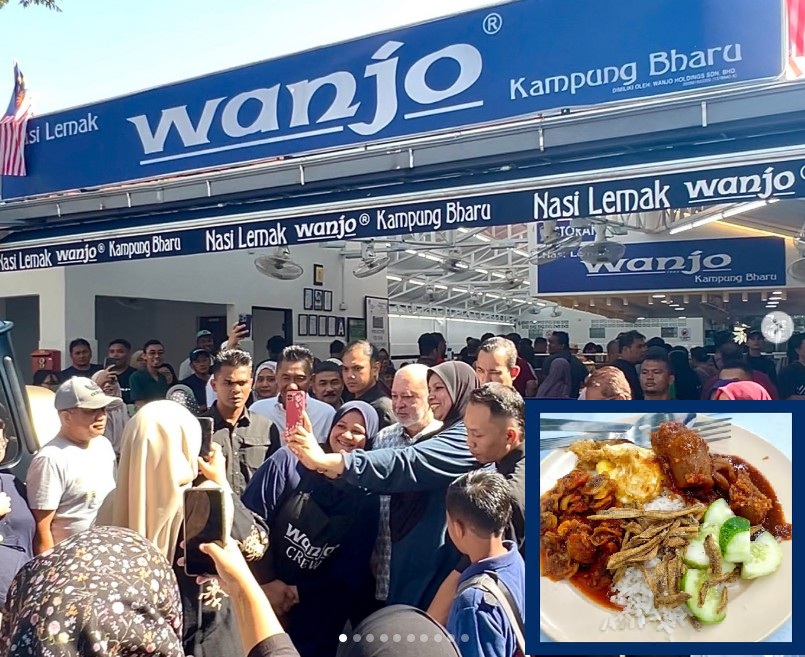
“What a waste, bruhhh 😭 We’re so much more than that! And you tried Nasi Lemak Wanjo pulak tu. 🤣”
Editor’s Note: Nasi Lemak Wanjo in Kampung Baru, Kuala Lumpur receives criticism mainly for its overwhelmingly sweet sambal and side dishes which may disappoint diners looking for a traditional savoury and spicy balance.
The Youtuber in question is @Doobydobap, the online persona of 29-year-old Tina Choi. a South Korean food content creator, recipe developer and food scientist who boasts 4.5 mil subscribers.
Her “100hrs in Kuala Lumpur, MALAYSIA” video which has fetched 678K views at the time of writing was uploaded five days ago.
Malay food is so stereotype
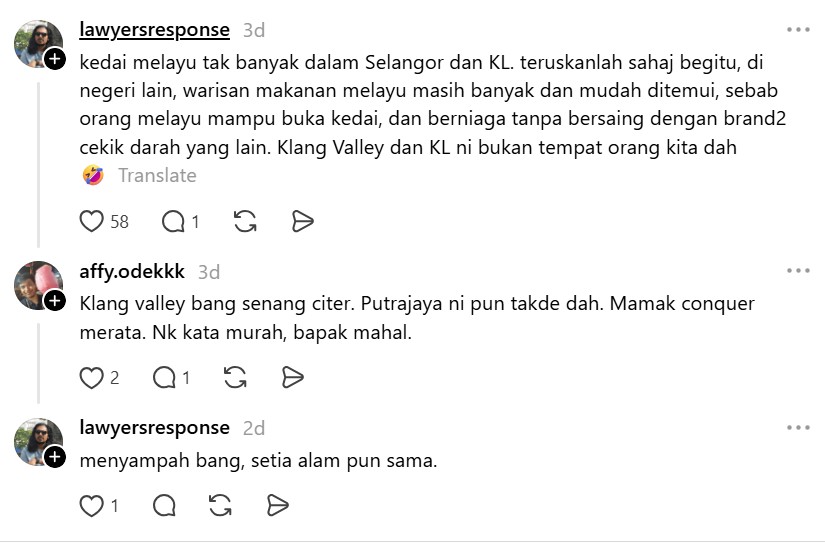
Lawyer Hafiz Baharudin in his reaction observed that Malay food haven tends to concentrate outside the Klang Valley due to the exorbitant coast of running food business.
“There aren’t many Malay eateries left in Selangor and KL … In other states, Malay culinary heritage remains abundant and easy to find because Malays can still afford to open shops and run businesses without having to compete against predatory brands,” reckoned the civil and criminal lawyer at Hafiz Baharudin & Associates.
Another replied that the same situation persists in administration capital Putrajaya whereby Mamak stalls “with ridiculous pricing have mushroomed everywhere”.
Mizuniwa Aquascape Café founder Stephan Fernandez pointed to the lack of representation of Malay food in the Malay F&B (food & beverage) scene.
“Even at the Malay eateries near my home where there’s a whole row of Malay stalls, all I see is ayam gepuk, 3 nasi penyet, ala thai, ayam goreng potong and pisang goreng (banana fritters),” he revealed.
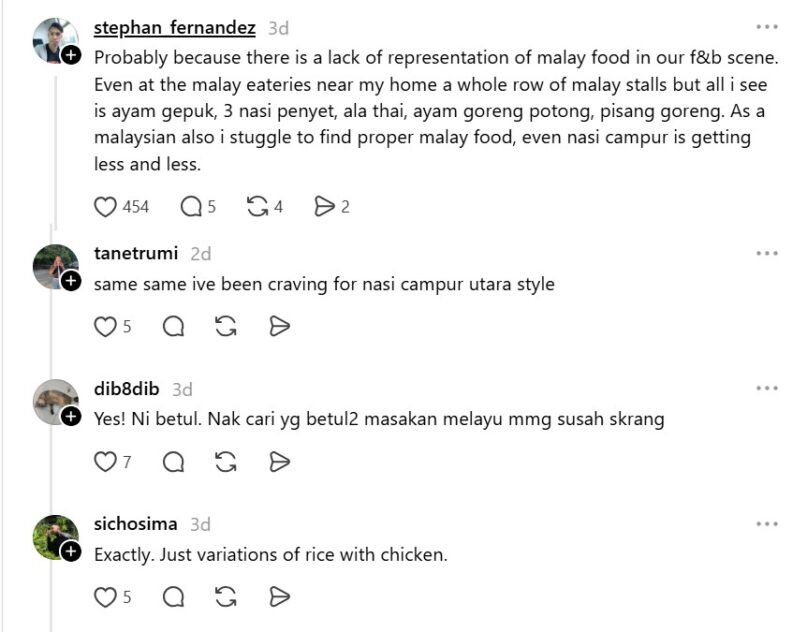
“As a Malaysian. I’m also struggling to find proper Malay food, even nasi campur (mixed rice) is getting less and less (these days).”
One commenter felt that the YouTuber should not be faulted as “I don’t think she has a large Malay following when i saw her first nasi lemak was Wanjo which is a sheer waste of opportunity”.
Another claimed to have “laughed so hard” with his sister over “how come she came to Malaysia, ate for 100 hours yet the Malay food feels so minority”.

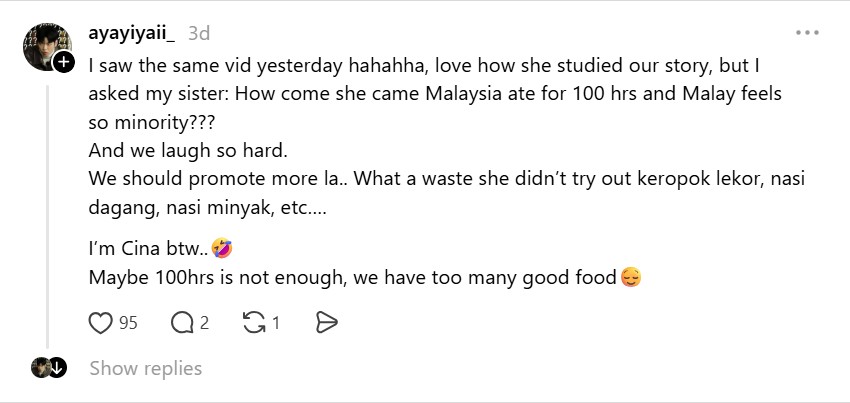
Inevitably, most of the culinary influencers rely on Chinese tour guides, hence expect “local Chinese food like pan mee to be promoted”, suggested one commenter.
“Only Mark Wiens (American travel and food blogger/vlogger) really took the trouble to explore Malaysian food regardless Chinese, Malay, Indian and Borneo,” he opined.
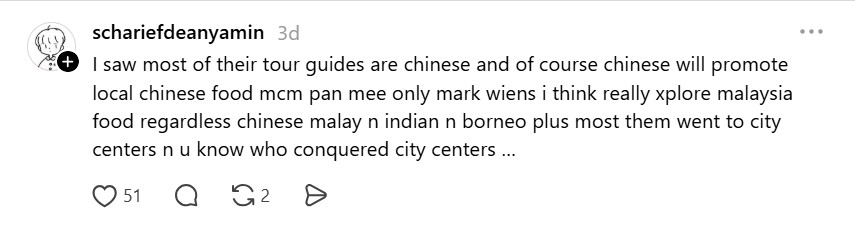
“Plus most them went to city centres and you know who conquered city centres.”
Thankfully, an enterprising commenter offered a list of useful marketing tips that can enable Malay food operators to better reach out to an international audience:
- Hire Youtuber to promote
- Hire Tiktoker to promote
- Pay to writers at lifestyle website to write article about us
- Collaboration with famous hotels
- Collaboration wih famous airlines
- Collaboration with tourist spots
- Collaboration with famous food brand. – Sept 18, 2026