

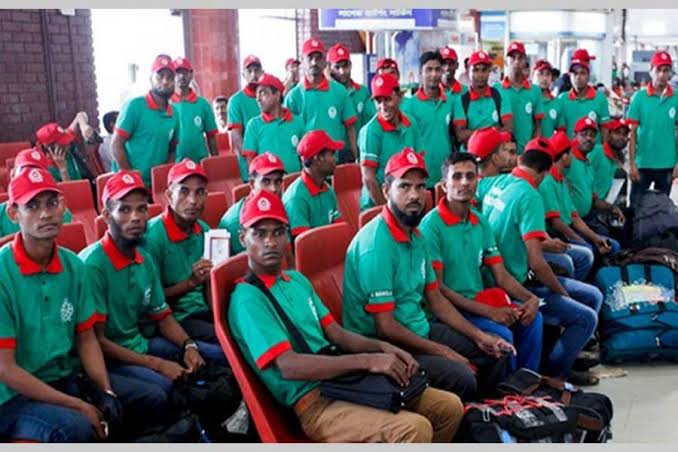
FOR years, the plight of Bangladeshi migrant workers has been the subject of intense scrutiny, particularly in relation to Malaysia. Allegations of high recruitment costs, job mismatches and exploitation have understandably triggered concern and debate.
But to frame this as a Malaysia-specific issue – or worse, to attribute it narrowly to systems such as the Foreign Workers Centralised Management System (FWCMS) – is to miss a far more uncomfortable truth.
The challenges faced by Bangladeshi migrant workers are not confined to any single destination country. They are systemic, structural and deeply embedded within the broader migration ecosystem originating from Bangladesh itself.
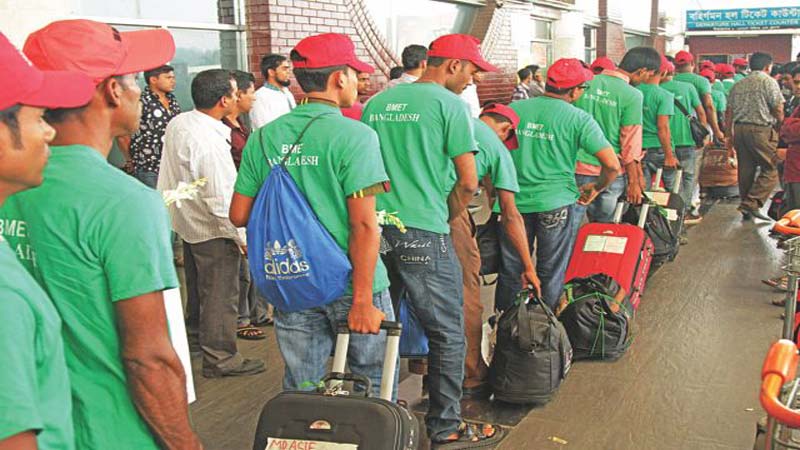
International reporting and multi-lateral agencies have consistently highlighted that Bangladeshi workers migrating to various regions – from the Gulf to Southeast Asia – face similar challenges.
A global pattern, not a local anomaly
According to recent coverage by Reuters, migrant workers across the Gulf continue to face systemic vulnerabilities tied to recruitment debt and opaque hiring practices. These are not isolated cases but recurring patterns across multiple jurisdictions.
Similarly, the International Labour Organization (ILO) has repeatedly underscored that excessive recruitment fees remain one of the primary drivers of debt bondage and forced labour risks globally.
Workers often incur costs equivalent to many months – if not more than a year – of wages before deployment.
The International Organization for Migration (IOM) has further documented how multi-layered broker networks within Bangladesh continue to inflate recruitment costs and dilute accountability.
High costs, false promises
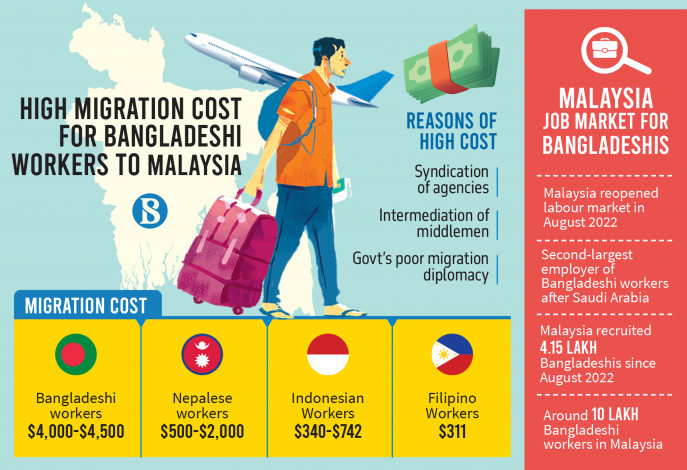
Media outlets within Bangladesh itself – including The Daily Star and Dhaka Tribune – have consistently reported migration costs reaching hundreds of thousands of taka per worker.
These costs are largely accumulated within the origin country, driven by layers of intermediaries rather than destination country policies.
More troubling are recurring accounts of workers being promised jobs that do not materialise or that differ significantly from what was advertised. Such cases have been reported across multiple labour corridors, from the Middle East to Asia.
Even employers are feeling the strain. Coverage in Gulf-based media indicates that rising recruitment costs for Bangladeshi workers are making hiring less viable, prompting some companies to shift towards alternative labour markets.
This highlights a critical point: high recruitment costs are not only a worker welfare issue –they are also a structural inefficiency affecting the global labour market.
It is therefore important to separate systemic origin-side issues from destination-side frameworks.
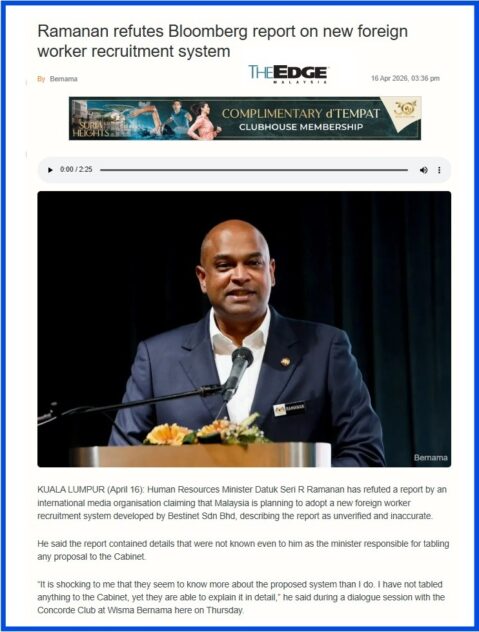
Recent reporting by The Edge Malaysia (based on Bernama) quoted Malaysia’s Human Resources Minister as affirming that the FWCMS is “award-winning” and “proven effective” in managing foreign worker recruitment processes.
The FWCMS was designed to enhance transparency, centralise processes and reduce irregularities in recruitment.
While no system is perfect, it represents an attempt to introduce structure and accountability on the destination side – precisely the kind of reform that international agencies have been calling for.
To conflate such systems with the broader issue of recruitment cost inflation risks over-simplifying a far more complex problem.
A structural issue at the source
At its core, the problem lies in a recruitment ecosystem that remains fragmented, opaque and difficult to regulate effectively within the source country.
The reliance on multi-tiered agent networks, weak enforcement of fee caps and the persistence of informal payments have created an environment where costs can escalate unchecked.
Workers, often lacking access to direct hiring channels, are left with little choice but to incur significant debt in pursuit of overseas employment.
Encouragingly, there are signs that Bangladesh is seeking to address these issues through bilateral engagement and policy reform. However, meaningful progress will require sustained structural change – not just incremental adjustments.
None of this is to suggest that destination countries should not uphold the highest standards of worker welfare. They must and they should.

But it is neither accurate nor constructive to single out any one country or system as the root cause of a problem that is demonstrably global in nature.
Over-simplified narratives risk diverting attention from where meaningful reform is most urgently needed – at the source of the recruitment chain.
If we are serious about improving outcomes for migrant workers, the conversation must evolve.
It must acknowledge that recruitment-related exploitation is a transnational issue and high costs are often incurred before workers leave Bangladesh.
Sustainable solutions require coordinated reform across origin and destination countries and as such, only by recognising the structural nature of the problem can we begin to design interventions that are both effective and fair. – April 22, 2026
Fellow Member of the Chartered Institute of Management Accountants (UK) and the Malaysian Institute of Accountants (MIA), Foo Lee Khean is an observer and commentator on subjects that matter most to Malaysians – from politics to the economy. He has served on the boards of several listed companies in Malaysia.
The views expressed are solely of the author and do not necessarily reflect those of Focus Malaysia.
Main image credit: The Finance Today (Bangladesh)