

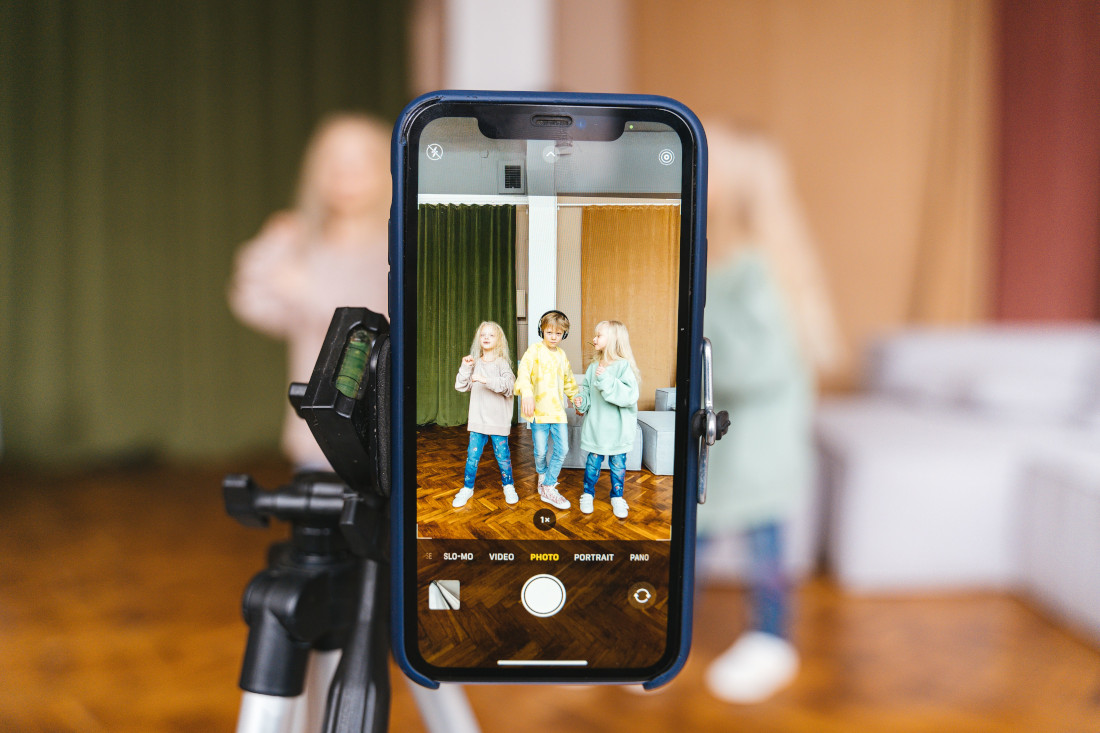
FROM a baby’s first smile to the first day of school, parents share life’s happiest moments online every day.
Social media has become the modern family album, helping families celebrate milestones and stay connected with loved ones. Yet every post also creates something more lasting: a child’s digital footprint.
Researchers call this growing trend “sharenting”, the practice of parents sharing photographs, videos and personal information about their children online.
While it helps preserve memories and strengthen family connections, it also raises an important question: how much should parents share, and have they considered the long-term impact on their children’s privacy?
Every parent is now a publisher

From a marketing perspective, every social media post tells a story about who we are and what we value. Parents are no different. Every photo contributes not only to the family’s online image but also to a child’s digital identity.
Years ago, family albums stayed on bookshelves. Today, every parent has become a publisher with an audience that extends far beyond relatives and friends. Unlike brands, however, children have no say in the online identity being created for them.
Once a photograph or personal detail is shared online, parents have little control over where it ends up.
Images can be copied, altered or reshared without permission, while a child’s digital identity begins taking shape long before they are old enough to make those decisions themselves.
Research has identified several risks associated with excessive sharenting, including permanent digital footprints, identity theft, misuse of children’s photographs, digital kidnapping, online grooming and the gradual erosion of children’s privacy.
The digital identity children inherit tomorrow is often built by the adults who post about them today.
Malaysia is one of Southeast Asia’s most digitally connected societies, where Facebook, Instagram, TikTok and WhatsApp are part of everyday family life.
At the same time, our culture places great value on sharing family moments with relatives and friends. Protecting children’s privacy is therefore not just the responsibility of parents but also grandparents, relatives and others who post about them.
As legal protections surrounding parental oversharing remain limited, parents continue to play the most important role in safeguarding their children’s privacy.
Awareness encourages safer sharing
Our study involving 161 Malaysian parents offers encouraging findings. Parents are generally willing to adopt safer online sharing habits when they understand the risks and feel confident using privacy settings.
Those who recognised the seriousness of online privacy threats, believed their own child could be affected, trusted that safer sharing practices would help, and felt capable of managing their privacy settings were far more likely to think carefully before posting.
Parents were also more likely to adopt safer habits when they did not see these precautions as inconvenient. Most importantly, those with a stronger desire to protect their children’s wellbeing were significantly more likely to practise safer sharenting.
One finding, however, deserves attention. Although many parents said they only shared information about their children occasionally, 42.2% still used public privacy settings. In contrast, only about one-third kept child-related posts private.
This suggests that the biggest risk is not necessarily how often parents post, but who can access those posts. A single public photo can quickly spread beyond its intended audience.
Recognising these concerns, UNICEF Malaysia has urged parents to think carefully about sharenting, reminding families that every post contributes to a child’s digital identity and that privacy settings alone cannot eliminate all online risks.
Share with care
This is not a call for parents to stop sharing family moments. It is a call to share more thoughtfully.
In marketing, we often say that a reputation takes years to build but only seconds to damage. The same principle applies to our children’s digital identity. Every click leaves a trace, and every post shapes how they may one day be seen by others.
While we cannot control everything that happens online, we can choose what we share, who can see it, and how we protect the privacy, dignity and future of the people who matter most. ‒ July 13, 2026
The author is a Professor of Marketing at the Faculty of Business and Economics, Universiti Malaya.
The views expressed are solely of the author and do not necessarily reflect those of Focus Malaysia.
Main image: Pexels/AI25.Studio Studio