
THE Malaysian Strategic Economy Chamber of Commerce (MSECC) has called for a fundamental shift in Malaysia’s economic priorities by urging the Madani government to place greater emphasis on structural reforms, corporate governance and strategic industrial development rather than relying excessively on short-term financial assistance.
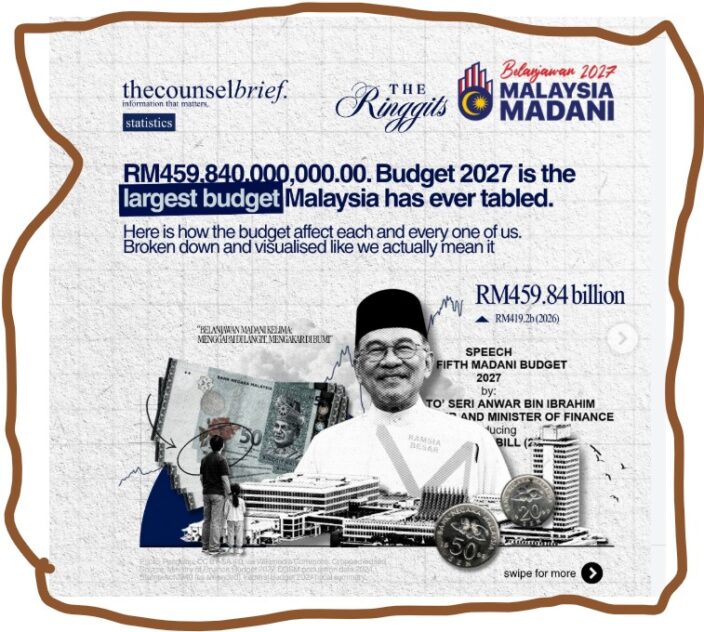
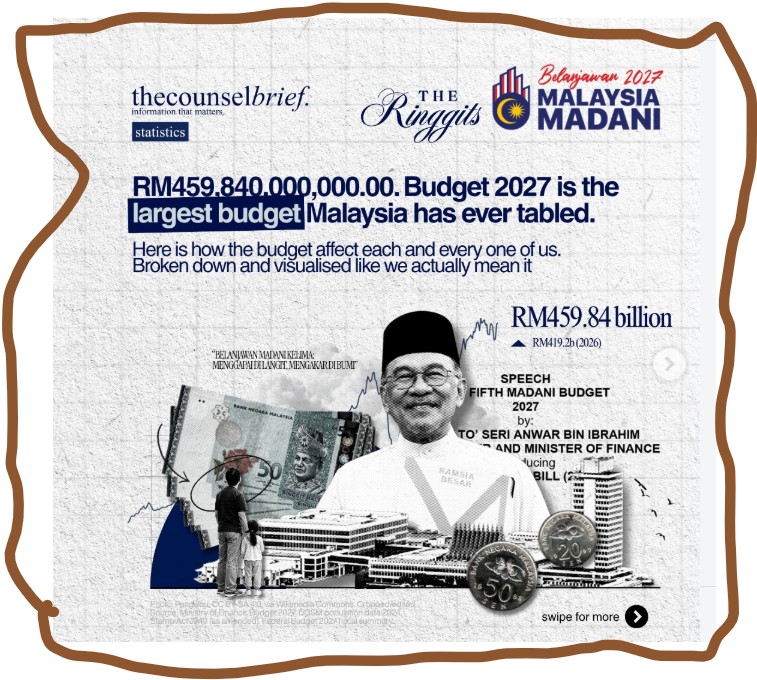
This is considering that Budget 2027’s RM16 bil allocation for Sumbangan Tunai Rahmah (STR) and Sumbangan Asas Rahmah (SARA) – up from RM15 bil – only reflects the government’s emphasis on easing household financial pressures.
However, such cash assistance alone cannot deliver sustainable prosperity, according to MSECC president Syed Azaudin Syed Ahmad.
“While financial assistance is necessary to protect vulnerable Malaysians, we can’t build a high-income nation through handouts.”
The government must address why wages remain under pressure, why businesses struggle to compete and why so many Malaysians continue to depend on financial assistance to meet their basic needs.
Clean up corporate Malaysia
In Syed Azaudin’s view, the controversy surrounding alleged Corporate Mafia activities should serve as a reminder of the urgent need to strengthen corporate governance, regulatory independence and enforcement.
On this note, MSECC acknowledged the government’s announcement of a special task force to investigate the Corporate Mafia allegations but questioned why another task force was needed when existing enforcement agencies should already be addressing these concerns.
“Malaysia needs decisive action, not another report,” he lamented. “The investigation must also expose regulatory failures, hold those responsible accountable and deliver meaningful reforms to restore investor confidence.”
Added Syed Azaudin: “We cannot talk about attracting high-quality investments and building national champions while serious questions are being raised about the integrity of our corporate ecosystem. Time is of the essence.”
Don’t address only the symptoms
MSECC has identified stagnant wages, low productivity, excessive dependence on foreign labour, bureaucratic inefficiencies, rising operating costs and limited domestic technological capabilities as major structural challenges.
In this regard, Syed Azaudin contended that Budget 2027 must also be judged not only by its immediate assistance programmes but also by its ability to accelerate economic transformation.
“Cash assistance helps people cope with today’s problems. Structural reforms determine whether those problems will continue tomorrow,” he observed.
Moving forward, MSECC urged Malaysia to draw lessons from an earlier era of ambitious nation-building and strategic industrial development.
Syed Azaudin highlighted the following local national giants:
- PETRONAS which evolved into a global integrated energy corporation;
- Permodalan Nasional Bhd (PNB) which emerged as a major national investment institution;
- DRB-HICOM Bhd which developed significant capabilities across the automotive, defence and industrial sectors; and
- Boustead Holdings Bhd which established a diversified presence in plantation, property, defence and other strategic industries.

He also cited landmark national development projects.
They include the PETRONAS Twin Towers and Kuala Lumpur City Centre (KLCC), Putrajaya, Kuala Lumpur International Airport (KLIA) and the Multimedia Super Corridor (MSC) as examples of Malaysia’s historical ambition to establish world-class infrastructure and position itself as a modern, competitive economy.
“These were not merely infrastructure projects or corporate achievements. They reflected a larger national vision to transform Malaysia, develop domestic capabilities, attract international investment and establish our presence on the global stage,” asserted Syed Azaudin.
MSECC further called for a renewed national economic strategy to nurture globally competitive Malaysian companies in strategic industries where the country possesses competitive advantages.
These include moving up the semiconductor value chain into chip design and advanced manufacturing; developing homegrown artificial intelligence, cybersecurity and digital technologies; building global champions in renewable energy and green technologies; and advancing sustainable palm-based products.
“Our goal should be to create a nation of wealth creators, innovators and global champions by leveraging on our existing natural and human resources,” envisages Syed Azaudin. – Oct 29, 2026
Main image credit: The Counsel Brief & The Ringgits/Instagram