


INDIA’S Supreme Court has recently raised questions about medicine pricing and the gap between what some medicines cost retailers and their maximum retail prices. Malaysia should pay attention before healthcare becomes increasingly unaffordable.
Consider one example cited during proceedings in Kishan Chand Jain v Union of India: a cancer medicine reportedly available to a retailer for about ₹2,700 carried a maximum retail price of ₹27,000.
The Supreme Court has questioned how such disparities arise and who ultimately bears the cost. The case remains ongoing, and the court’s observations are not a final determination of the issues before it.
But the underlying question is relevant to Malaysia: how much can private healthcare charge before necessary treatment becomes financially out of reach?
Malaysia faces a particular challenge because healthcare operates across two systems. Public hospitals provide heavily subsidised care but face capacity and waiting-time pressures. Private hospitals can offer faster access and specialised treatment, but costs can be substantial.
For many Malaysians, medical insurance or takaful is therefore an important form of financial protection.
Yet insurance does not necessarily reduce the underlying cost of healthcare. It changes how that cost is financed.
A hospital bills an insurer, which pays eligible claims. Rising healthcare costs can then feed into premiums, deductibles, co-payments and policy restrictions. A patient may be protected from a large bill today while facing higher insurance costs tomorrow.
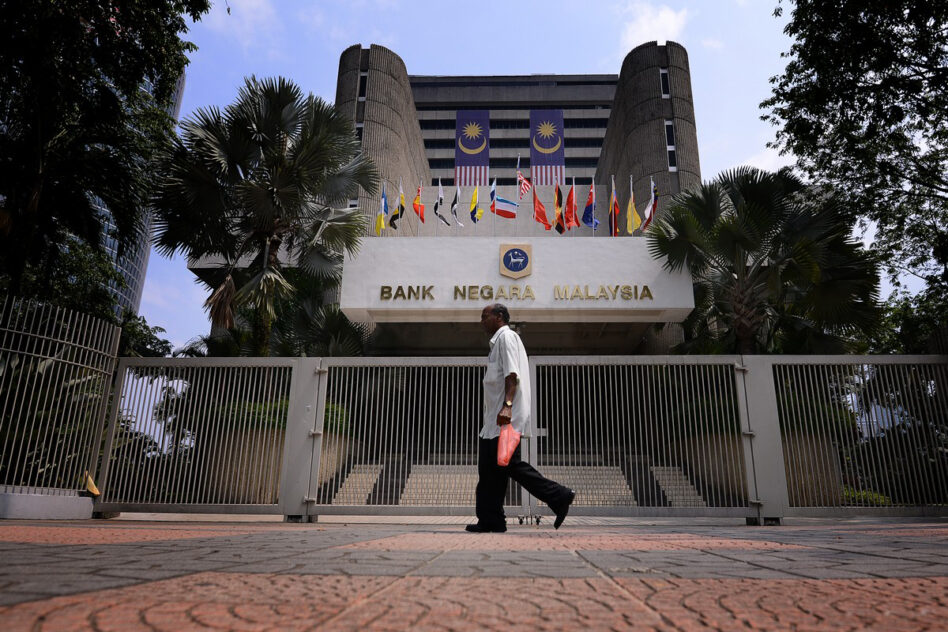
This is why the government’s RESET strategy deserves attention. The Joint Ministerial Committee on Private Healthcare Costs, involving the Finance and Health ministries and Bank Negara Malaysia, is working on measures addressing private healthcare costs and medical inflation.
These include price transparency, cost-effective healthcare options and changes to provider-payment mechanisms.
Malaysia has also introduced medicine-price display requirements in private healthcare facilities and community pharmacies. That is useful, but displaying a price is only the beginning of transparency.
Patients should be able to understand what they are paying for.
Why does one hospital charge substantially more than another for a comparable procedure? What are the medicine costs and mark-ups? What are the professional and facility fees? What does insurance cover?
Most importantly, what will the patient actually have to pay?
A patient entering a hospital should not have to become an accountant, lawyer and medical expert simultaneously.
The government’s proposed reforms point towards a more transparent model. MediAsas, the Base Medical and Health Insurance/Takaful plan under RESET, began its Klang Valley pilot in July 2026 ahead of a planned nationwide rollout in January 2027.
The initiative is intended to provide more affordable and sustainable medical protection while improving certainty around hospital bills and out-of-pocket costs.
The proposed move towards Diagnosis-Related Groups (DRGs) is also important. DRG-based payment is intended to support more standardised payments for clinically comparable episodes of care and shift attention towards value rather than simply the volume of services provided.
That could change the question from “How many things can be charged?” to “What does this treatment actually deliver for the patient?”
Reform, however, should not assume that every private hospital charge is excessive. Private healthcare providers have legitimate costs, including specialist and nursing salaries, equipment, facilities, medicines, technology and round-the-clock services.
The objective should not be to eliminate legitimate profit. It should be to prevent unreasonable, opaque or unjustifiable pricing.
Malaysia could therefore consider a comprehensive private healthcare price-and-value framework, including standardised bills, meaningful pre-treatment estimates where clinically practicable, clearer disclosure of medicine and device charges, comparable pricing information for common procedures and accessible mechanisms for patients to challenge questionable bills.
There should also be clearer rules around commercial incentives.
If a patient can safely obtain a prescribed medicine from a legitimate external pharmacy at a substantially lower price, there should be transparent rules governing when a hospital may require an in-house purchase.
The principle is simple:
A sick patient must never become a captive consumer.
The Public Accounts Committee has also examined concerns over rising insurance premiums and private hospital charges, with the Government saying its recommendations broadly align with the RESET reform agenda.
The next step is to turn reform into measurable outcomes. Malaysia should track whether medical-cost inflation is falling, whether insurance premiums are becoming more sustainable, how prices for common procedures vary between providers, and how much patients continue to pay out of pocket.

Healthcare is not an ordinary consumer market. A person facing cancer, heart disease or an emergency cannot simply walk away and shop around.
That is why the relationship between patients, hospitals, insurers and regulators must be built on trust.
India’s Supreme Court proceedings offer a timely reminder of the questions that arise when the gap between the cost of a medicine and what a vulnerable patient is asked to pay becomes extreme.
Malaysia has an opportunity to address those questions before they become harder to resolve.
Private healthcare can be commercially viable without becoming commercially opaque.
Healthcare may be an industry, but illness is not a business opportunity. The ultimate measure of Malaysia’s healthcare reforms should be whether ordinary Malaysians can obtain necessary treatment without fearing financial ruin. ‒ Oct 2, 2026
KT Maran is a Focus Malaysia reader.
The views expressed are solely of the author and do not necessarily reflect those of Focus Malaysia.
Main image: NST