
CONTROVERSIES regarding history are normal in politics, especially in the context of strong political partisanship in Malaysia but sometimes it’s annoying when people look at history merely from an ethno-religious perspective instead of broader understanding of reality that requires objectivity.
In order for history and civilisations to be understood truthfully, it is vital that personal feelings, beliefs or perceptions are kept aside, and veritable facts, logic and evidence that hold true for everyone is emphasised.
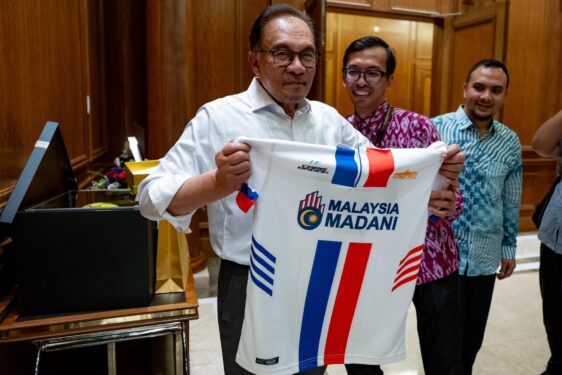
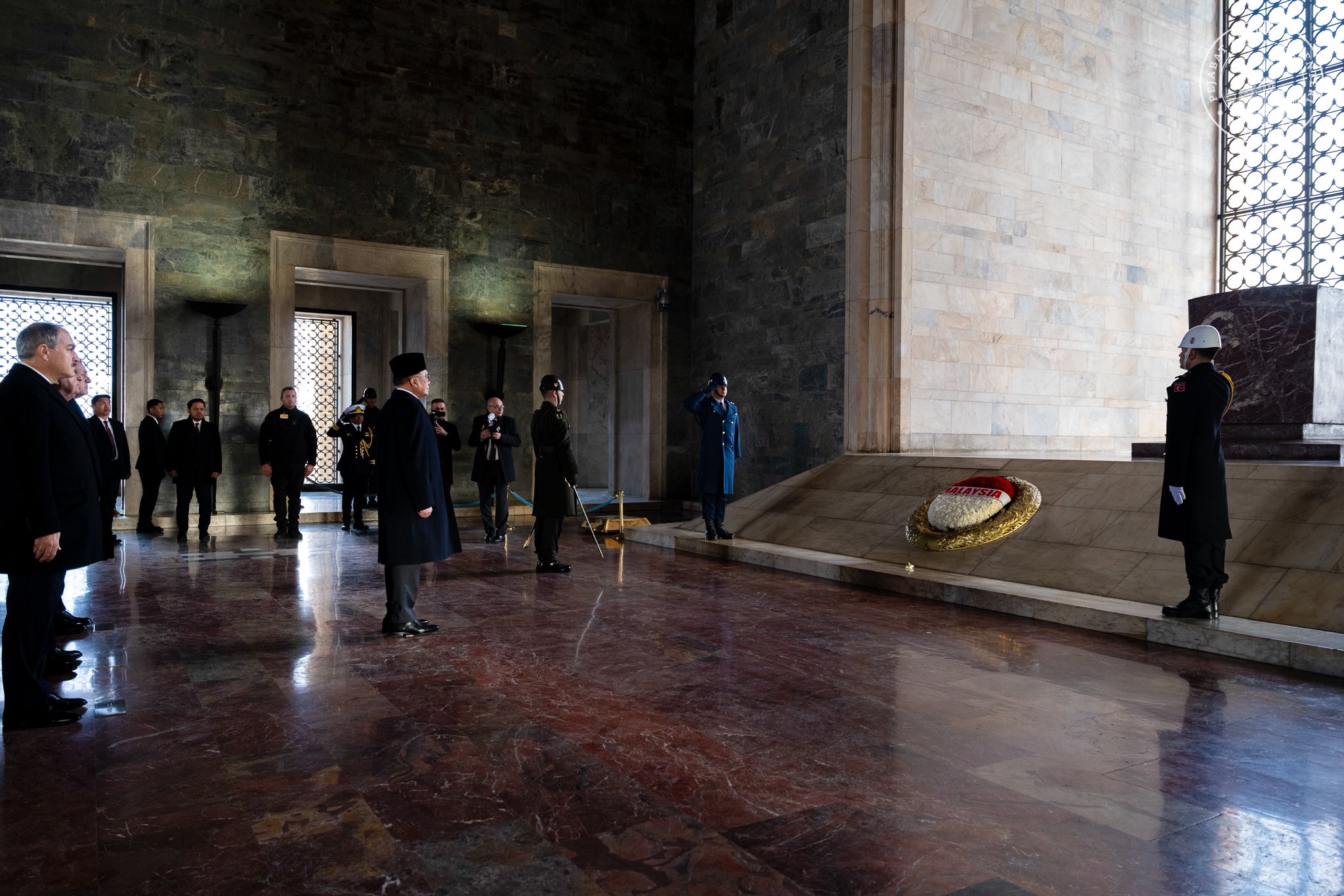
Prime Minister Datuk Seri Anwar Ibrahim’s decision to lay a wreath at the mausoleum of the founder of the Turkish republic Mustafa Kemal Atatürk during his official visit to the country has brought about religious controversy among certain segments of the Malaysian population.
Ataturk is considered controversial or even an enemy because of his sweeping reforms to secularise and modernise Turkey. He abolished the Ottoman Caliphate, banned religious courts, and replaced Islamic law with secular civil codes.
His nationalist movement consolidated the gains of the Armenian genocide during the Turkish War of Independence (1919‒1923) and his republic abolished Ottoman structures that could have held perpetrators accountable, making him a key figure in the post-genocide era’s consolidation of Turkish identity built partly on the absence of Armenians.
As Muslims are unhappy over the total collapse of the Ottoman empire and its Islamic governance, many Christians were also unhappy about their volatile rights in the country, about the Armenian genocide, and issues related to religious heritage.
In the above historical context Atatürk formed modern Turkey from the ashes of the Ottoman Empire. A significant figure that cannot be ignored, if one reflects on the progress of modern Türkiye today.
He ensured Türkiye independence by leading the Turkish war of independence to defeat occupying allied forces.
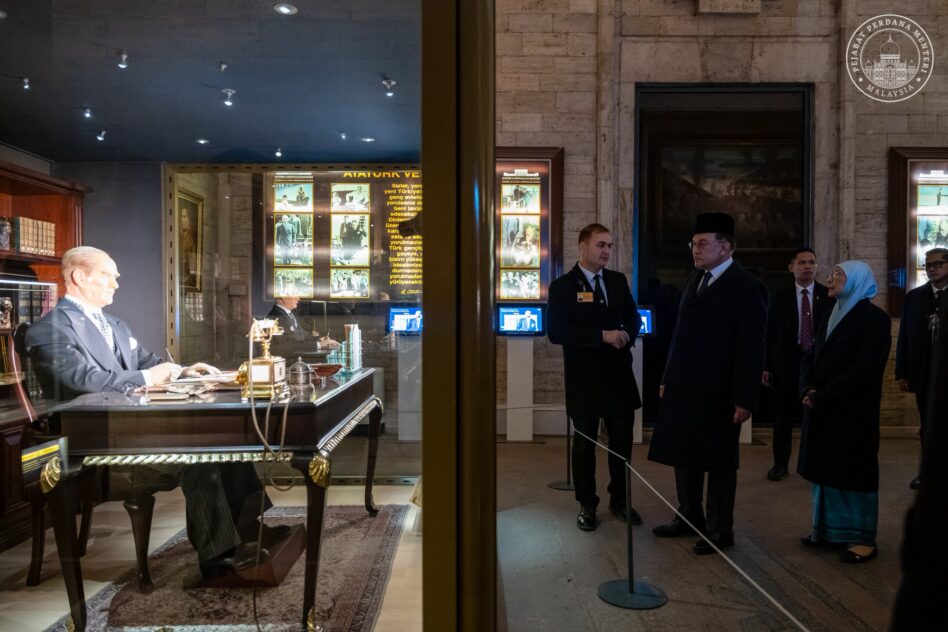
He led the liberation in the context of Western forces trying to seize parts of the country. These is the reason he is still respected by the Turkish people, with the aforementioned facts indicating that there are broader dimensions in history and not just about the Ottoman empire.
In a nutshell it is important not only to understand the context of how modern Türkiye was formed, its history is wide and complex and cannot be reduced to religious nostalgia.
One could learn from Turkish history on what was moral and immoral and how to address the current volatile global situation.
Türkiye’s ancient history can be used as an example for modern times where one should avoid brutal empire building of the Byzantine and Ottoman empire, and build healthy civilisation dialogue for peace.
What is pertinent here is there were civilisational encounters in this land of Anatolia where there were healthy interactions that built on each civilisational culture and knowledge and there were also brutal and immoral conquest that brought certain animosity among communities that can be felt to this day.
While it is true that Anwar had to swallow some of his previous negative remarks about Atatürk, his latest reasoning on the matter is objective and makes sense.
One cannot reduce history to religious polemics. ‒ Jan 15, 2026
Ronald Benjamin is a human resources practitioner based in Ipoh. He is currently secretary of the Association for Community and Dialogue.
The views expressed are solely of the author and do not necessarily reflect those of Focus Malaysia.
Main image: Izzuddin Abd Radzak/ Prime Minister’s Office of Malaysia