


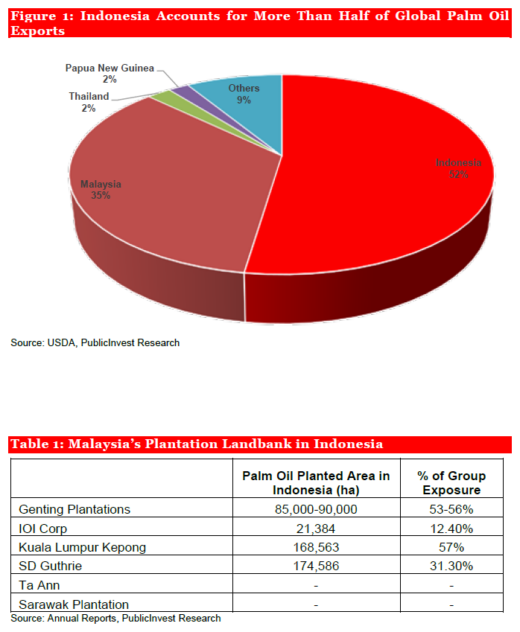
MALAYSIAN plantation companies with substantial operations in Indonesia could face another layer of regulatory uncertainty following the passage of Indonesia’s new Agrarian Reform Regulation Law.
The development comes after a year marked by land seizures and significant fines involving plantation operators, adding to concerns over the regulatory environment in the world’s largest palm oil producing country.
However, the full implications of the new legislation are not yet clear.
According to Public Investment Bank (PIB), much will depend on the regulations that are expected to follow, particularly those governing landholding limits, mechanisms for resolving land disputes and the powers to be given to a newly established agency overseeing agrarian reform.
Despite the heightened uncertainty, analysts do not expect the legislation to have a significant impact on earnings or asset values in the near term. As such, their existing sector view remains unchanged.
The recent weakness in plantation stocks could also present an opportunity, particularly with expectations for stronger earnings in the second half of the year.
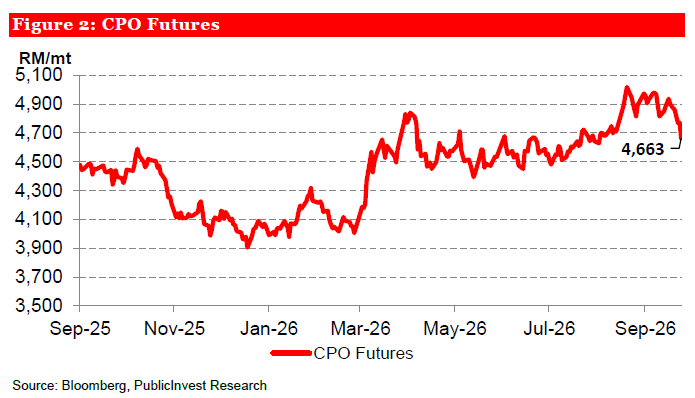
This is supported by firmer crude palm oil (CPO) prices despite the seasonal increase in production.
The sector remains rated Overweight, with a full-year CPO price assumption of RM4,500 per tonne.
Indonesia’s House of Representatives passed the Agrarian Reform Regulation Law last week as part of efforts to restructure how land is controlled, owned, used and managed.
The legislation also aims to make land available for agrarian reform, address long-running agrarian disputes and strengthen coordination among government agencies involved in land reform.
PIB noted that a dedicated body will also be established to oversee the implementation of agrarian reform, supported by integrated monitoring and policy mechanisms.
One provision that could have implications for plantation companies is the requirement for holders of cultivation rights, known as Hak Guna Usaha, and plantation permit holders to allocate at least 20% of their land for agrarian reform and redistribution.
Alternatively, companies may meet the requirement through an equivalent profit-sharing arrangement.
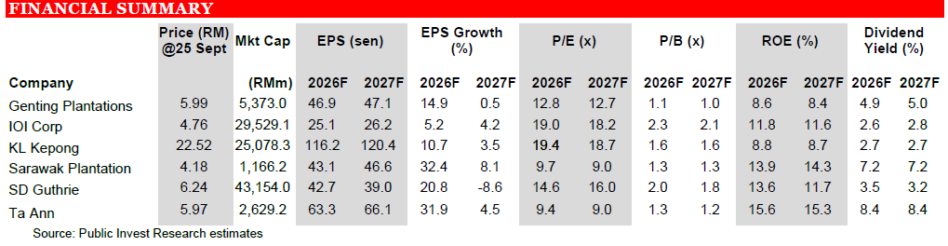
This could introduce an additional regulatory risk for Malaysian plantation groups with sizeable Indonesian operations, including SD Guthrie, Kuala Lumpur Kepong and Genting Plantations.
Against this backdrop, PIB favours Sarawak Plantation and Ta Ann, citing their stronger-than-industry production growth, attractive dividend yields of between 7% and 8%, and the absence of Indonesian exposure at a time when regulatory uncertainty is increasing.—Sept 28, 2026
Main image: The Borneo Post