
OIL & Gas analysts of Hong Leong Investment Bank (HLIB) expects average Brent crude prices of USD95-100 in quarter four 2026 before subsequently easing to USD75/bbl in 2027.
“We believe that the relatively short period of elevated oil prices is insufficient to cause a prolonged shortage in Nitrile Butadiene Rubber to force weaker small- and mid-sized players out of the market and accelerate the return to a supply-demand equilibrium for gloves,” said HLIB.
Hence, concerns over structural oversupply are likely to persist.
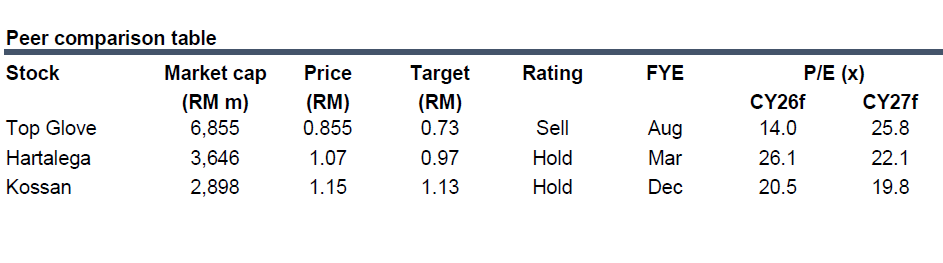
That said, following recent share price correction, HLIB see a more balanced risk-reward profile and therefore retain their Neutral sector rating.
Rubber glove production places considerable demands on natural resources, requiring substantial quantities of natural rubber, nitrile, water and energy to sustain manufacturing and drying operations.
These processes make efficient energy use, water conservation and waste management key environmental priorities for glove manufacturers.
At the same time, growing environmental concerns have placed greater scrutiny on the sourcing of natural rubber, particularly over potential deforestation and biodiversity loss in rubber-producing regions.
Regulatory requirements, including the EU Deforestation Regulation (EUDR), have further heightened the need for manufacturers to establish traceability systems that can track rubber supplies back to their plantations of origin.
As a result, major Malaysian glove producers, including Kossan, Hartalega, and Top Glove, have each developed structured environmental goals to address these shared environmental pressures.
The glove manufacturing sector is inherently resource-intensive, relying heavily on natural rubber and nitrile inputs, large volumes of water, and continuous heating processes for production.
This makes waste generation, water stewardship, and energy management a core environmental concern across the industry.
On that note, HLIB maintained its rating on Malaysia’s rubber glove sector, identifying distinct environmental, social and governance (ESG) strengths among Top Glove Corp Bhd, Hartalega Holdings Bhd and Kossan Rubber Industries Bhd.
In its ESG-focused sector review dated Oct 8, HLIB assessed the comprehensiveness of each company’s sustainability targets and disclosure practices, noting that no single manufacturer emerged as an all-round leader across the three ESG pillars.
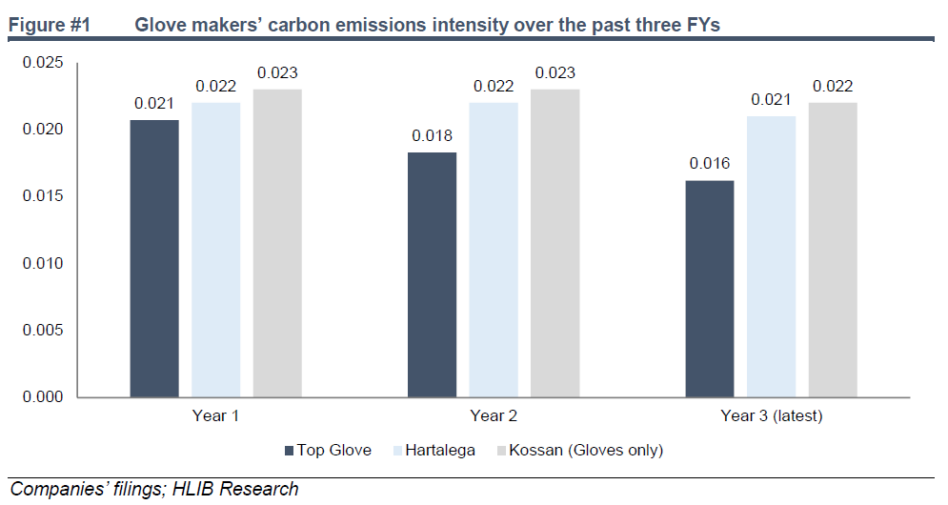
Top Glove stands out in environmental performance, with the most comprehensive targets.
By financial year 2028 (FY28), it aims to reduce Scope 1 and 2 carbon emissions intensity by 15% from its FY22 baseline, increase solar energy’s share of electricity consumption to 10%, and expand Scope 3 emissions coverage to eight categories.
However, its water and effluent targets lag Kossan’s. Hartalega has the least comprehensive environmental targets but leads in social sustainability, having introduced measurable health and safety and human rights targets in FY26.
Its FY29 commitments include zero reported child labour cases, zero substantiated human rights violations, full compliance with minimum wage requirements, workers retaining their passports, and 40% female representation in managerial positions.—Oct 9, 2026
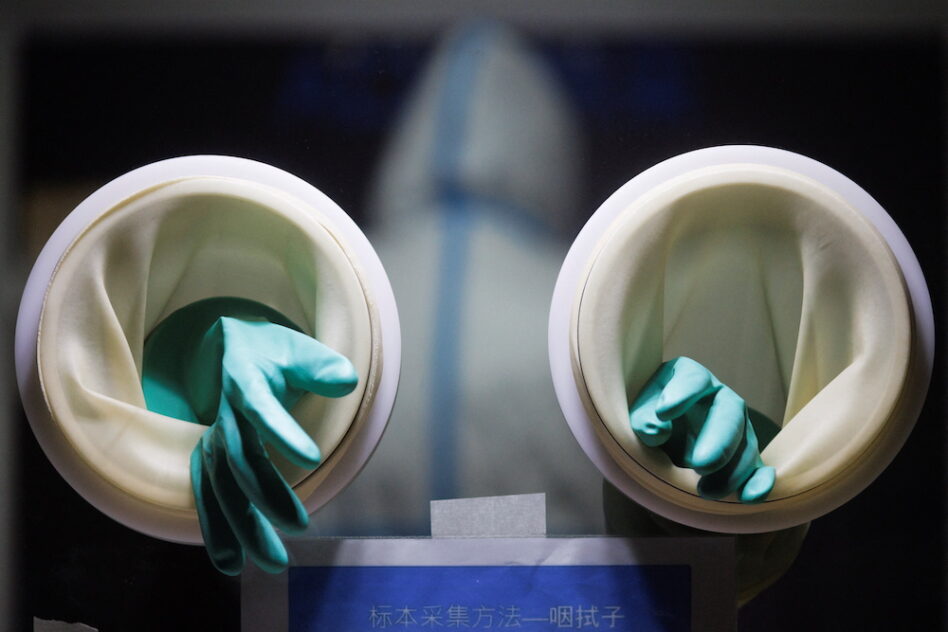
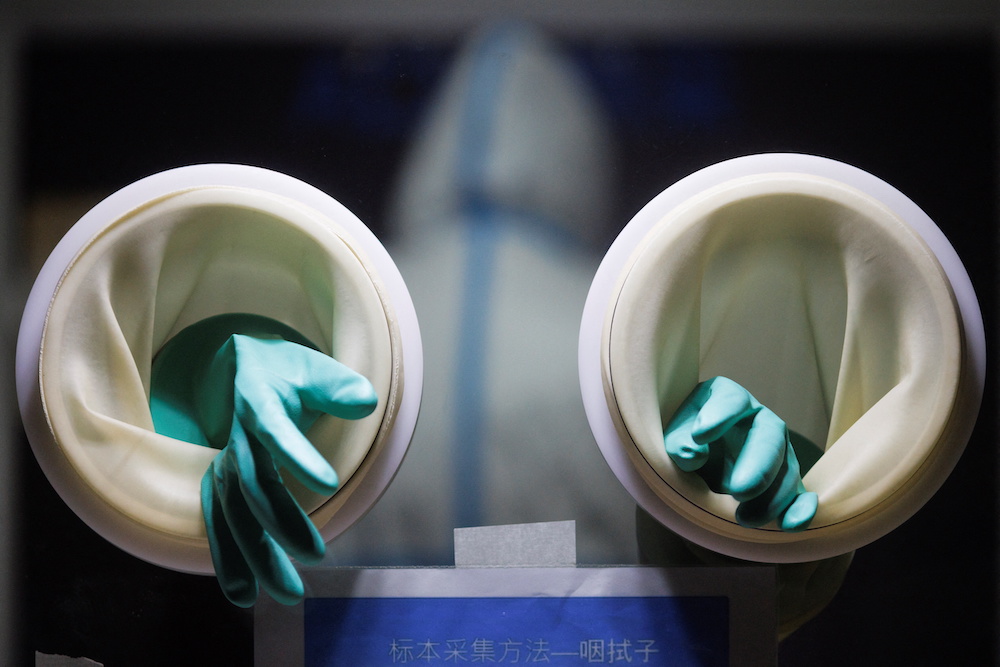
Main image: Reuters