
FORMER Sarawak police chief Datuk Dr Yusoff Nook has praised the Putrajaya for strengthening enforcement under Budget 2027.
According to him, the extra resources come at the right time to tackle illicit trade, especially fake/contraband cigarettes, which remain widely available at retail outlets nationwide.
Budget 2027 allocates RM1.1 bil to strengthen the operations of enforcement agencies, including the Royal Malaysia Police (PDRM), Royal Malaysian Customs Department, the Domestic Trade and Cost of Living Ministry (KPDN), the Malaysian Anti-Corruption Commission (MACC) and the Malaysia Competition Commission (MyCC).
Moreover, funding for the Malaysia Border Control and Protection Agency (AKPS) also rose to RM490 mil from RM37 mil this year.
“As I served in enforcement for many years, I can tell you the success of operations depend on resources: officers on the ground, vehicles, intelligence and the ability to return to the same premises again and again,” asserted Yusoff who is currently the president of E-Cure Sdn Bhd, a consultancy specialising in economic crime control.
“This allocation gives our agencies exactly that. The government must be credited for putting enforcement at the heart of Budget 2027.”
The allocation builds on Prime Minister Datuk Seri Anwar Ibrahim’s directive in October for a coordinated, nationwide crackdown on illegal foreign-run businesses.
That directive brought together the police, Customs, KPDN, local councils and Immigration. He also welcomed the Customs Director-General’s statement that the agency is stepping up action against foreign-operated business premises.
In this regard, PMX has also mentioned that enforcement agencies would tighten controls and would not hesitate to revoke the business licences of local owners found renting out their premises to foreign nationals.
Stringent follow-up action
In Yusoff’s view, this is an important step towards holding business owners accountable for allowing their premises to be used for illegal activities.
In Sarawak, police have similarly indicated that they may seek licence revocation through local authorities if investigations substantiate claims two convenience stores targeted in Kuching arson attacks in September were selling online gambling top-ups.
This, according to Yusoff, underscores the importance of enforcing business licensing rules and taking firm action when illegal activities are established.
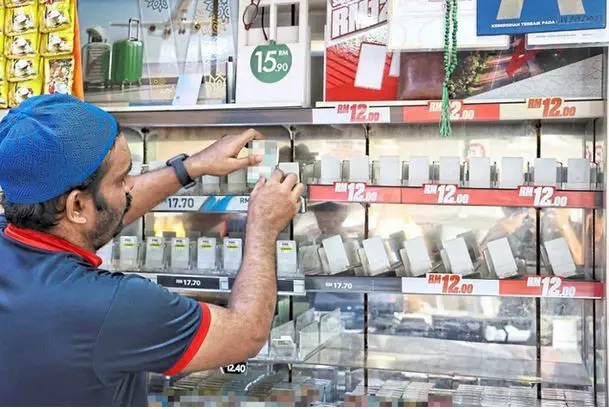
Enforcement must also address the widespread availability of illicit cigarettes at retail outlets nationwide.
“Illicit cigarettes are not hidden. They’re sold openly at sundry shops, often by foreign workers and buyers know exactly where to find them. Stronger enforcement at these outlets can make a visible difference,” stressed the qualified lawyer.

A NielsenIQ’s Illicit Cigarettes Study in May 2026 found that 56.2% of cigarettes consumed in Malaysia are illicit.
In the same month, a Wawasanex survey of 603 Malaysians found that 99% of buyers claimed that illicit cigarettes were easy or very easy to obtain while 73% named migrant workers as the main sellers.
“With these resources in place, I hope to see more frequent inspections of outlets, follow-up checks on premises that have already been raided, and close coordination between Customs, KPDN, Police and local authorities on business licences,” insisted Yusoff.
Outlets that keep selling illicit cigarettes, including those fronted by foreign workers, should face firm action.
“Budget 2027 has given our enforcers the tools. Used well at retail level, they can make illicit cigarettes harder to find and that is the result Malaysians want to see. – Oct 20, 2026
Main image credit: The Star