
FOUR political coalitions are fielding candidates for the 36 state seats in the Negeri Sembilan election scheduled for August 1, 2026.
Nominations closed on July 18.
The main contestants are BN, PH, PN and, to a limited extent, Bersatu, with one or two of its allies contesting under the party’s logo.
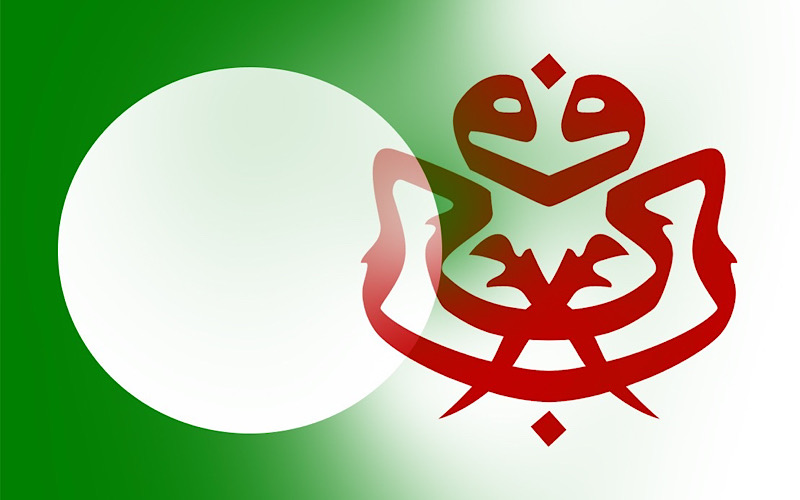
The most striking feature of this election is the emergence of an electoral understanding between PN and BN.
What first became apparent during the recent Johor state election—the electoral pact between BN and PN (or, more accurately, PAS)—is now being replicated in Negeri Sembilan.
PAS, by virtue of its dominance within PN, argues that its cooperation with BN and UMNO is intended to ensure the election of Malay-Muslim candidates.
In reality, this appears less a matter of principle than a strategy to gain greater access to power and influence at the federal level.
For decades, PAS projected itself as the moral alternative to the politics of BN and, more recently, PH. It claimed that its politics, grounded in religion and ethnicity, were superior to what it portrayed as the pragmatic and transactional politics of its rivals.
From independence until very recently, PAS defined its political identity through its opposition to BN. That has now changed.
After spending decades in the federal opposition, PAS appears to have concluded that access to federal power is more important than preserving its long-held political principles.
In pursuit of this objective, it has sought a rapprochement with its former political adversary—UMNO, the dominant party in BN and the very party it once condemned as the symbol of kleptocratic rule.
Moving closer to UMNO inevitably meant severing its relationship with Bersatu, a major component of PN.
It was only a matter of time before PAS constructed narratives to justify breaking its ties with Bersatu while simultaneously rationalising electoral cooperation with BN, as witnessed in the Johor election.
These political manoeuvres caught Bersatu completely by surprise. The party entered the Johor election without sufficient time to reorganise or develop an effective strategy after what it regarded as PAS’ political betrayal.
The consequence was predictable. PN was unable to mount an effective challenge and had little impact on the electoral outcome.
PAS’ betrayal of the opposition can be likened to that of Brutus, who fatally turned against Julius Caesar. Likewise, PAS unexpectedly turned against its own coalition and partners, particularly Bersatu.
Faced with this unprecedented political realignment, Bersatu had little choice but to rethink its strategy.
This explains why Bersatu declared itself the country’s sole opposition party, together with its ally, IPR, in the Negeri Sembilan election.
In doing so, Bersatu has effectively positioned itself as the principal opposition force, while PN, under PAS’ direction, has drifted towards political alignment with BN.
By abandoning its traditional role, PAS has, in effect, committed political harakiri. The mantle of leading the opposition has now passed to Bersatu.
Following the Negeri Sembilan election, Bersatu is expected to pursue a national strategy aimed at consolidating its position as Malaysia’s only credible opposition party.
Ironically, PAS’ own political choices have created the conditions for Bersatu to assume that role. PAS may believe that its political manoeuvring demonstrates strength and strategic wisdom.
It may instead prove to be the beginning of its long-term political decline. For decades, PAS defined itself in opposition to UMNO. Its growing political alignment with BN now raises fundamental questions about its future identity and its claim to champion Malay and Islamic interests.
Will there be any meaningful distinction between PAS and UMNO in the years ahead? Should Malaysians be surprised if PAS eventually advocates a formal merger with UMNO?
Meanwhile, having freed itself from PAS’ political dominance, Bersatu is now positioned to build a resilient and dynamic opposition founded on national resilience and respect for Malaysia’s ethnic and religious diversity.—July 19, 2026
Former DAP stalwart and Penang deputy chief minister II Prof Ramasamy Palanisamy is chairman of the United Rights of Malaysian Party (Urimai) interim council.
The views expressed are solely of the author and do not necessarily reflect those of Focus Malaysia.
Main image: themalaysiapress.com