GOOD governance remains one of the central challenges in Malaysia’s political struggle. Beyond political personalities, race and religion, the country needs stronger foundations for the ethical, transparent and effective exercise of public power.
At its core, good governance means managing public resources responsibly, protecting rights, ensuring accountability and delivering effective services for the common good.
Countries such as Singapore, Switzerland and Norway are often cited in international discussions of governance and public-sector effectiveness. For Malaysia, the more important question is what these principles should mean in our own institutions and political system.
Does the current unity government have the foundations of comprehensive good governance?
Is there an impartial legal framework that is enforced equally? Is information about government decisions and public spending sufficiently accessible?
Are public officials held accountable for their actions? Are public services effective and timely? And are citizens given meaningful opportunities to participate in public decision-making, including through elected local government?
To be fair to Prime Minister Datuk Seri Anwar Ibrahim, the unity government has taken measures to address immediate economic pressures facing lower- and middle-income households.

Initiatives such as Sumbangan Tunai Rahmah (STR) and Sumbangan Asas Rahmah (SARA) have provided direct assistance, while the government’s progressive wage policy is intended to raise workers’ incomes and support broader labour-market reform.
These measures represent aspects of governance concerned with social protection and economic well-being. But good governance is broader than the delivery of assistance or economic policies. It also depends on institutions, accountability, transparency and equal application of the law.
This is where Pakatan Harapan’s (PH) political history becomes relevant.
The 2018 general election created a historic opportunity for an alternative model of government. The election ended 61 years of Barisan Nasional (BN) rule and saw an opposition coalition form the federal government for the first time.
The election took place amid the major political controversy surrounding 1MDB and allegations involving then-prime minister Datuk Seri Najib Razak, who denied wrongdoing.
PH’s victory therefore carried expectations of institutional and governance reform. Its 2018 manifesto included measures to strengthen the Malaysian Anti-Corruption Commission, improve transparency and reform public institutions.
However, the PH government collapsed after 22 months during the political crisis that became known as the Sheraton Move. The resulting change of government took place through shifts in parliamentary support rather than a general election.
The episode remains contested in Malaysian political discourse, with critics describing it as a departure from the mandate voters had given PH in 2018.
The issue resurfaced during the 2022 general election, when PH again campaigned on institutional reform.
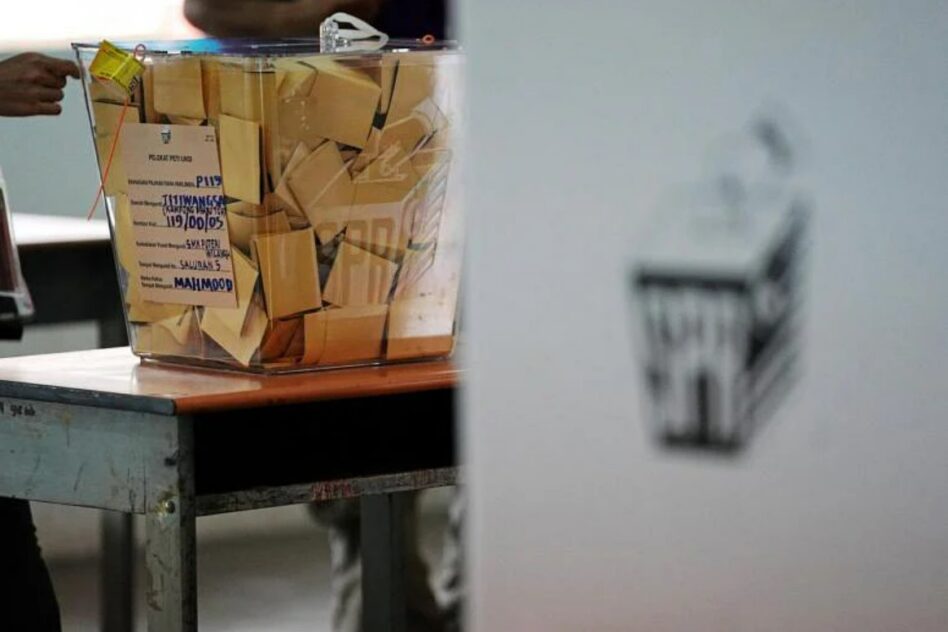
Its GE15 proposals included separating the roles of the attorney general and public prosecutor, establishing a Parliamentary Budget Office, introducing a Fixed Parliament Term Act and strengthening transparency and parliamentary oversight.
Yet PH ultimately formed a unity government with BN after GE15 produced a hung Parliament. The arrangement brought together political forces that had previously been on opposing sides of the political divide.
That compromise may have provided political stability, but it also raises a fundamental question: how far can institutional reform go when political survival depends on maintaining a broad coalition?
The issue became particularly visible in the case involving Deputy Prime Minister and UMNO president Datuk Seri Ahmad Zahid Hamidi.
In September 2023, the High Court granted Zahid a discharge not amounting to an acquittal (DNAA) on all 47 charges in the Yayasan Akalbudi case after prosecutors decided not to continue the trial.
The prosecution cited, among other reasons, the need for further investigation and the examination of representations submitted by Zahid’s defence. The court subsequently said the prosecution had provided cogent reasons for seeking the DNAA.
The case nevertheless generated public debate about prosecutorial independence and the separation of the attorney general’s roles as government legal adviser and public prosecutor.
More recently, questions have also been raised over spending at the Rural and Regional Development Ministry (KKDW), headed by Zahid.
Finance Ministry figures show KKDW’s actual expenditure exceeded its approved annual allocation in 2023, 2024 and 2025.
DAP adviser Lim Guan Eng has characterised the cumulative difference as RM2.1 bil and called for a MACC investigation.

KKDW has disputed the characterisation of the spending as unauthorised overspending, while MACC said on Oct 1 that it had not received an official complaint and had not opened an investigation.
Whatever the eventual findings on these matters, they illustrate why institutional safeguards matter. Good governance cannot depend on whether a particular politician is trusted by the public. It requires systems capable of applying rules consistently, regardless of who holds office.
This is why PH needs to look beyond Anwar Ibrahim at the next general election.
If PH continues to campaign on good governance, it should be prepared to translate that promise into a clear framework for governing.
Such a framework should include institutional independence, transparent public spending, equal application of the law, parliamentary oversight and meaningful mechanisms for public participation.
If no party commands a majority after the next general election, PH should make institutional reform and good governance part of any agreement to form another unity government.
Political cooperation may be necessary for stability. But stability should not become a substitute for reform.
If an agreement cannot provide credible safeguards for good governance, PH should be prepared to remain outside government rather than allow its reform agenda to become secondary to the arithmetic of coalition politics.
Malaysians who look beyond the familiar polemics of race and religion, as well as the superficial appearance of political stability, deserve to experience good governance as a lived reality rather than another election slogan.
That is the standard PH should set for itself: not simply who leads the government, but how power is exercised once it gets there. ‒ Oct 1, 2026
Ronald Benjamin is a human resources practitioner based in Ipoh. He is currently secretary of the Association for Community and Dialogue.
The views expressed are solely of the author and do not necessarily reflect those of Focus Malaysia.
Main image: Prime Minister’s Office/Izzudin Abd Radzak