


FOR many working professionals, career success has long followed a familiar formula: secure a stable job, work hard, earn promotions and gradually climb the corporate ladder.
It is a path shaped by the importance placed on financial security, professional recognition and family expectations, where job titles and salaries are often seen as indicators of how well someone is doing in life.
But as industries evolve and career paths become less predictable, a growing question is emerging: does moving up the corporate ladder necessarily mean moving towards a fulfilling career?
According to Dr Takashi Tsutsumi of GLOBIS Asia Campus, traditional measures of success remain important. What is changing, however, is how professionals view these achievements in relation to their broader aspirations.
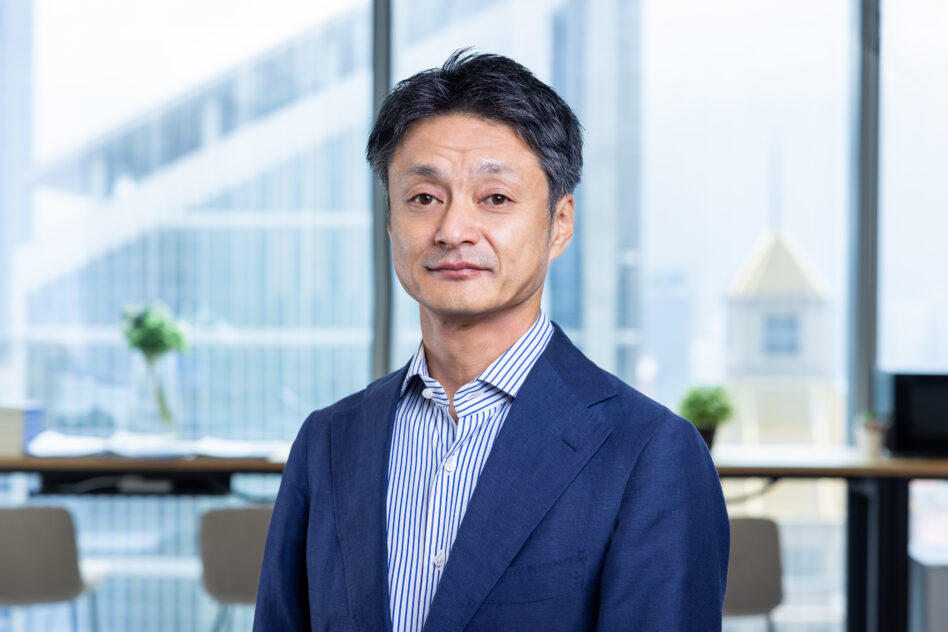
“What is changing is their position. They are moving from being the definition of success to being one part of it,” Dr Takashi told Focus Malaysia.
For previous generations, career progression was often relatively straightforward. Joining a reputable organisation, working towards senior positions and remaining with an employer for many years offered a sense of stability and security.
Today’s younger professionals face a different reality.
Technological developments, artificial intelligence (AI) and frequent organisational restructuring have made traditional career paths less predictable, prompting professionals to consider other aspects of career success, including personal growth, autonomy and meaningful work.
Dr Takashi believes this represents an evolution in career expectations rather than a rejection of ambition.
When ambition becomes a race without a finish line
In many Asian societies, career achievements are closely tied to financial stability, family responsibilities and social expectations.
Securing a well-paying job, advancing into management and achieving financial independence remain important aspirations for many working professionals.
However, Dr Takashi cautioned that the same drive to succeed can become counterproductive when professionals begin measuring their achievements primarily against those of others.
“The risk lies in where that energy is directed. When the motivation is mainly to avoid falling behind others, people tend to chase the milestones that everyone else is chasing,” he explained.
These milestones may include attending prestigious institutions, joining well-known companies or reaching particular salary levels and job titles by a certain age.
While achieving them can bring professional recognition, they do not necessarily translate into personal fulfilment.
“Competition based on comparison has no natural end point, because there is always someone further ahead,” Dr Takashi observed.
The challenge, therefore, is not to eliminate ambition but to understand what drives it.
Rather than constantly asking whether they are keeping pace with their peers, Dr Takashi encouraged professionals to reflect on what they genuinely want to achieve and why those goals matter to them.
Finding success beyond titles and salaries
For some professionals, questions about career fulfilment emerge only after years of pursuing conventional achievements.
Dr Takashi recalled the experience of a medical doctor who participated in a GLOBIS programme in Japan.
Despite having established a successful medical career, the participant began questioning their broader aspirations while preparing to open a clinic.
The decision involved more than professional expertise. It required the doctor to consider the kind of healthcare they wanted to provide, the organisation they hoped to build and the leader they wanted to become.
Through the programme, the participant began reflecting on these questions more seriously.
For Dr Takashi, the experience illustrated how professional accomplishments do not always provide a clear sense of personal direction.
“Professional achievement and personal fulfillment are related, but they are not the same thing,” he explained.
“Achievement is usually defined from the outside: by the organisation, by society or by the expectations of family and peers. Fulfilment comes from the inside.”
He warned that when individuals spend years pursuing goals shaped largely by external expectations, they may eventually experience burnout, disengagement or uncertainty about their career direction.
Organisations can also be affected when experienced employees lose motivation or decide to leave despite having achieved professional success.
Can ambition and personal purpose coexist?
At GLOBIS, the pursuit of meaningful career development is closely connected to the Japanese philosophy of Kokorozashi, which refers to a personal mission that extends beyond individual achievement.
According to Dr Takashi, the philosophy centres on two fundamental questions: what an individual personally wants to achieve, and what contribution they hope to make to society.
Unlike conventional career planning, which often begins with identifying a desired position, employer or promotion timeline, Kokorozashi encourages individuals to first understand their values, strengths and the impact they want to create.
“A career plan tells you where you want to go; kokorozashi tells you why,” Dr Takashi explained.
Importantly, he stressed that the philosophy does not require professionals to abandon ambition or reject conventional career achievements.
Instead, it encourages them to pursue those achievements with a clearer sense of direction.
A promotion, for instance, may be meaningful not merely because it brings a higher title or salary, but because it provides greater influence and opportunities to contribute to something the individual values.
“Kokorozashi is not a rejection of ambition. On the contrary, a genuine sense of mission is often more demanding than conventional ambition, because it sets goals that go beyond oneself,” he said.
Dr Takashi believes ambition and personal purpose can complement each other when competitiveness is directed towards personally meaningful goals rather than external comparisons.
Employers must rethink career progression

As employees reassess their career priorities, businesses are also facing pressure to reconsider how they support professional development.
Dr Takashi noted that while many organisations have introduced flexible working arrangements, wellbeing initiatives and learning opportunities, traditional promotion structures often remain largely unchanged.
In some workplaces, moving into management continues to be treated as the primary indicator of career advancement, even when employees may have different professional aspirations.
He believes employers should recognise that meaningful career development does not always require moving higher in an organisational hierarchy.
Alternative opportunities, such as specialist career tracks, project-based responsibilities, internal rotations and greater autonomy, can allow employees to grow in ways that better reflect their strengths and interests.
Managers also have a role in understanding what employees hope to achieve and identifying opportunities that connect their aspirations with business objectives.
“Employees’ individual aspirations are not a distraction from business performance; they are one of its most important drivers,” Dr Takashi stressed.
He cautioned that organisations which fail to adapt risk losing talented employees, experiencing disengagement and limiting innovation.
For employers competing to attract and retain skilled professionals, providing meaningful career development opportunities may become increasingly important alongside remuneration and traditional promotion prospects.
However, balancing business performance with individual purpose does not mean every employee aspiration can always be accommodated.
Instead, leaders need to communicate organisational priorities clearly, acknowledge difficult trade-offs and identify areas where business needs and employees’ personal ambitions can align.
Purpose does not have to come at the expense of financial security
While pursuing meaningful work may sound appealing, financial commitments remain an important consideration, particularly for professionals navigating rising living costs and family responsibilities.
From housing loans and household expenses to supporting family members, career decisions are often influenced by responsibilities that extend beyond individual aspirations.
For professionals managing these commitments, leaving a stable job to pursue a personal passion may not always be a realistic option.
Dr Takashi acknowledged these practical concerns and cautioned against treating career purpose as a reason to make sudden or financially risky decisions.
Rather than immediately changing jobs or industries, professionals can begin by identifying opportunities to find greater meaning in their existing roles.
Taking on new responsibilities, supporting colleagues, pursuing short courses or exploring projects outside their usual scope of work can help individuals discover their interests without compromising financial stability.
They can also explore alternative career directions gradually through volunteering, internal transfers or conversations with people working in fields they are considering.
“Pursuing purpose does not mean making dramatic, reckless leaps,” Dr Takashi said.
“In my experience, the most sustainable approach is to treat purpose and financial stability not as opposites, but as things to be pursued together, step by step.”
He added that professional capabilities and networks remain important sources of long-term security, particularly as technological changes continue to reshape the workforce.
Rethinking what success means

For professionals who have spent years pursuing conventional career milestones, Dr Takashi believes the first step towards finding greater purpose may be simpler than expected.
Reflecting on his own experience, he recalled starting his career assessing accident claims at an insurance company, a position that was not initially what he had hoped for.
Although he remained in the role for only three years, committing himself to the work helped him discover new challenges and develop a greater appreciation for the experience.
“Meaning is not only something we find; it is also something we create through the way we approach our work,” he explained.
He encouraged professionals to examine the moments in their careers when they felt most fulfilled, as well as those that left them frustrated or disengaged.
Understanding these experiences can help individuals identify their strengths, values and motivations before deciding on their next career move.
At GLOBIS, students are encouraged to articulate their Kokorozashi and revisit it as their experiences and aspirations evolve.
Dr Takashi also highlighted the importance of learning across generations.
While younger professionals may place greater emphasis on flexibility, personal growth and impact, more experienced professionals often bring perspectives shaped by responsibility, perseverance and long-term commitments.
He believes both groups can benefit from exchanging these perspectives, particularly when considering what they want their careers to represent.
Ultimately, Dr Takashi sees career purpose not as a destination to be reached once, but as something that develops through experience, action and reflection.
“A personal mission is not discovered once and for all. It deepens through action and reflection, and it often grows from something for oneself into something for others and for society. It is never too late to start.” ‒ Nov 25, 2026