
EVERY government Budget carries a question from the people: how will this help with the cost of living?
Budget 2027, to be tabled on Oct 9, arrives with that question more pointed than usual, following a year marked by geopolitical tensions, volatile global oil prices and tighter subsidy reforms at home.
For markets, however, Budget Day is only the beginning. Parliament’s schedule spans 37 sitting days through Dec 8, with policy and committee debates continuing through October and November.
For investors, this creates a period in which details announced in the Budget will be scrutinised and translated into market expectations.
Malaysia enters this cycle with relatively strong economic momentum. The economy grew 6% in the second quarter of 2026, bringing first-half growth to 5.7%, supported by domestic demand, investment and exports.
Market consensus currently puts Budget 2027’s total expenditure at around RM438.9 bil, comprising approximately RM353.1 bil in operating expenditure and RM85.8 bil in development expenditure.
The estimated development allocation is broadly aligned with the 13th Malaysia Plan, which provides for average annual development expenditure of about RM86 bil from 2026 to 2030.

Attention will also turn to the government’s fiscal consolidation path, with analysts expecting the fiscal deficit to narrow towards about 3.3% of GDP in 2027, from an estimated 3.5% in 2026.
The Finance Ministry’s Pre-Budget Statement has already outlined the broad challenges facing the government. The prolonged conflict in West Asia pushed crude oil prices above US$100 a barrel, creating additional pressure on fuel subsidies and the wider fiscal position.
The government expects targeted subsidy reforms to generate about RM15.5 bil in annual savings, although higher global energy prices could complicate those calculations. Fuel subsidies could reach RM40 bil this year amid elevated oil prices.
At the same time, Malaysia’s growth story continues to be supported by high-value investments in areas including semiconductors, artificial intelligence, data centres, digital services and energy.
Approved investments reached a record RM431.1 bil in 2025, reflecting continued investment momentum.
What to watch: Key policy variables
Beyond the headline spending figure, two policy areas could have significant implications for markets.
Subsidies and fiscal discipline: Energy costs and domestic subsidies remain closely watched. Effective Sept 1, the basic monthly BUDI95 quota was restored to 300 litres at RM1.99 per litre, benefiting more than 16 million users.
The move provides additional support to households while leaving the government to balance cost-of-living concerns against fiscal discipline.
Taxation and revenue: The market is generally not expecting major new taxes, with attention instead focused on the optimisation of existing revenue measures, including SST and the Capital Gains Tax on unlisted shares.
The mandatory e-Invoicing threshold was also raised from RM1 mil to RM3 mil in annual revenue or sales from Sept 1, providing relief to smaller businesses. Meanwhile, the proposed carbon tax remains an area to watch, particularly for the iron, steel and energy sectors.
Sectors to Watch
Budget allocations are likely to affect sectors differently depending on where spending and policy support are directed.
Construction and building materials could benefit from development expenditure, particularly through projects involving hospitals, schools and transport infrastructure.
Grid and water infrastructure, renewable energy and energy storage could also gain from continued investment in strategic infrastructure.
Semiconductors and AI-related companies remain linked to Malaysia’s broader push into digital industrialisation, data centres and implementation of the National AI Action Plan.
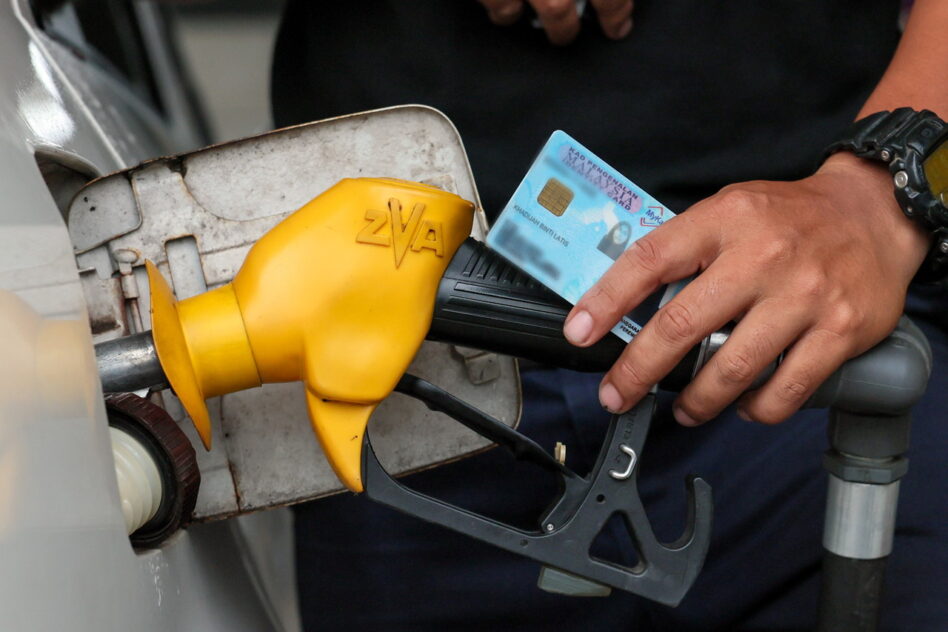
Targeted cash assistance such as BUDI95 could also help support household purchasing power, potentially benefiting value-oriented and affordable consumer segments.
On the other hand, steel and high-carbon energy producers could face additional compliance costs if the proposed carbon-tax framework proceeds.
Discretionary consumer companies may also face pressure if the SST framework is expanded or adjusted, particularly if higher costs weigh on household spending.
Tobacco and alcohol companies could remain sensitive to expectations surrounding potential excise-duty changes ahead of the Budget.
For investors, the key takeaway is that Budget Day is unlikely to be defined by the headline allocation alone. The details of how funds are allocated, how subsidies evolve and how quickly projects are implemented will matter just as much.
The broader question is whether Malaysia can translate its strong investment pipeline and economic momentum into sustainable productivity, higher-value activity and resilient household incomes.
For investors, that means looking beyond the initial Budget reaction and watching where the money ultimately goes. ‒ Sept 29, 2026
Main image: Harian Metro