
THE future of Malaysian federalism depends on a question that remains insufficiently resolved: what kind of federation does Malaysia intend to become?
The debate is not simply about distributing administrative powers between Putrajaya and the states. It concerns the constitutional understanding, political trust and institutional arrangements that sustain the federation.
In The Union and the State: Contested Visions of the UK’s Future (2024), Ciaran Martin identifies three competing approaches to Britain’s territorial governance: multinational unionism, muscular unionism and pragmatic efforts to make existing arrangements work.
Although the United Kingdom’s constitutional system differs fundamentally from Malaysia’s written Federal Constitution, Martin’s central insight remains relevant.
A federation cannot rely indefinitely on political improvisation. It needs a coherent vision of how authority should be shared and how its constituent parts should work together.

The first approach, multinational unionism, recognises that a state can accommodate distinct national and regional identities through meaningful self-government.
In Malaysia, this resonates with the constitutional position of Sabah and Sarawak and the significance of the Malaysia Agreement 1963 (MA63).
The formation of Malaysia was not merely an administrative merger. It involved constitutional arrangements intended to accommodate the circumstances and interests of its constituent territories.
Federalism must therefore be understood through both the general constitutional framework and the distinctive safeguards associated with Sabah and Sarawak.
The continuing implementation of MA63 illustrates this evolving relationship. In late 2025, the Prime Minister’s Office reported progress on 13 implementation matters, including the transfer of electricity regulatory authority to Sabah and changes involving state technical departments.
These developments demonstrate that the federation’s practical operation can evolve through negotiated institutional arrangements.
Yet progress on individual matters does not, by itself, answer the larger question of Malaysia’s federal future. The challenge is to establish predictable principles governing autonomy, fiscal arrangements, administrative responsibilities and intergovernmental consultation.
Martin’s second model, muscular unionism, emphasises the authority and primacy of the central state. Applied to Malaysia, this would place greater weight on national uniformity, central coordination and the Federal Government’s capacity to pursue common policies.
Central coordination is not inherently incompatible with federalism. National security, economic stability and nationwide infrastructure often require cooperation across jurisdictions.
The difficulty arises when coordination becomes a justification for routinely displacing state authority or overlooking constitutionally established responsibilities.
Excessive centralisation can create a political paradox. Measures intended to strengthen national unity may deepen dissatisfaction if states perceive that their constitutional position is being weakened.

In Sabah and Sarawak, where MA63 remains a central reference point in debates over the federation, how federal authority is exercised can be as consequential as the policies themselves.
Martin’s third approach, pragmatic adjustment, involves improving existing arrangements without fundamentally redesigning the constitutional settlement.
Malaysia has often proceeded in precisely this way through negotiations, administrative transfers, special grants and institutional agreements.
Pragmatism can deliver tangible results. However, when reforms depend primarily on separate negotiations, uncertainty persists over the federation’s long-term direction.
Progress risks becoming contingent on changing political circumstances, executive goodwill and the willingness of governments to revisit unresolved issues.
This is where Martin’s emphasis on statecraft becomes particularly instructive. Federalism is sustained not only by constitutional provisions but also by how governments manage overlapping responsibilities, resolve disputes and communicate the value of shared institutions.
For Malaysia, effective statecraft requires stronger intergovernmental mechanisms, more transparent fiscal arrangements and more consistent consultation.
Federal and state governments should be able to distinguish clearly between areas requiring national coordination and those where state decision-making should prevail.
Disagreements should be managed through established processes rather than recurring tests of political strength.
Fiscal federalism is especially important. Grants and revenue arrangements are not merely accounting exercises; they shape whether states believe that the federation distributes resources and responsibilities fairly.
Predictable formulas, transparent negotiations and accountable expenditure can strengthen confidence in federal institutions.

The implications extend beyond Sabah and Sarawak. How Malaysia manages asymmetrical federalism will shape the credibility of its constitutional arrangements nationwide.
Respecting differentiated state interests need not weaken Malaysian identity. Properly managed, it can demonstrate that national belonging does not require uniformity in every aspect of governance.
Ultimately, the question is not whether Malaysia should choose between a strong federation and empowered states. It is how to reconcile national capacity with constitutional diversity.
A federation that cannot coordinate effectively risks fragmented policymaking, while one that centralises excessively risks eroding the trust on which cooperation depends.
Malaysia’s federal future therefore requires more than a succession of negotiated adjustments. It needs a durable framework that clarifies responsibilities, protects constitutional commitments and makes cooperation between Putrajaya and the states routine rather than exceptional.
The federation’s long-term strength will depend not simply on how much authority the centre retains, but on whether every level of government can exercise its powers with legitimacy, predictability and mutual confidence. ‒ Sept 28, 2026
R Paneir Selvam is Principal Consultant at Arunachala Research & Consultancy Sdn Bhd (ARRESCON), a think tank specialising in strategic national and geopolitical analysis.
The views expressed are solely of the author and do not necessarily reflect those of Focus Malaysia.
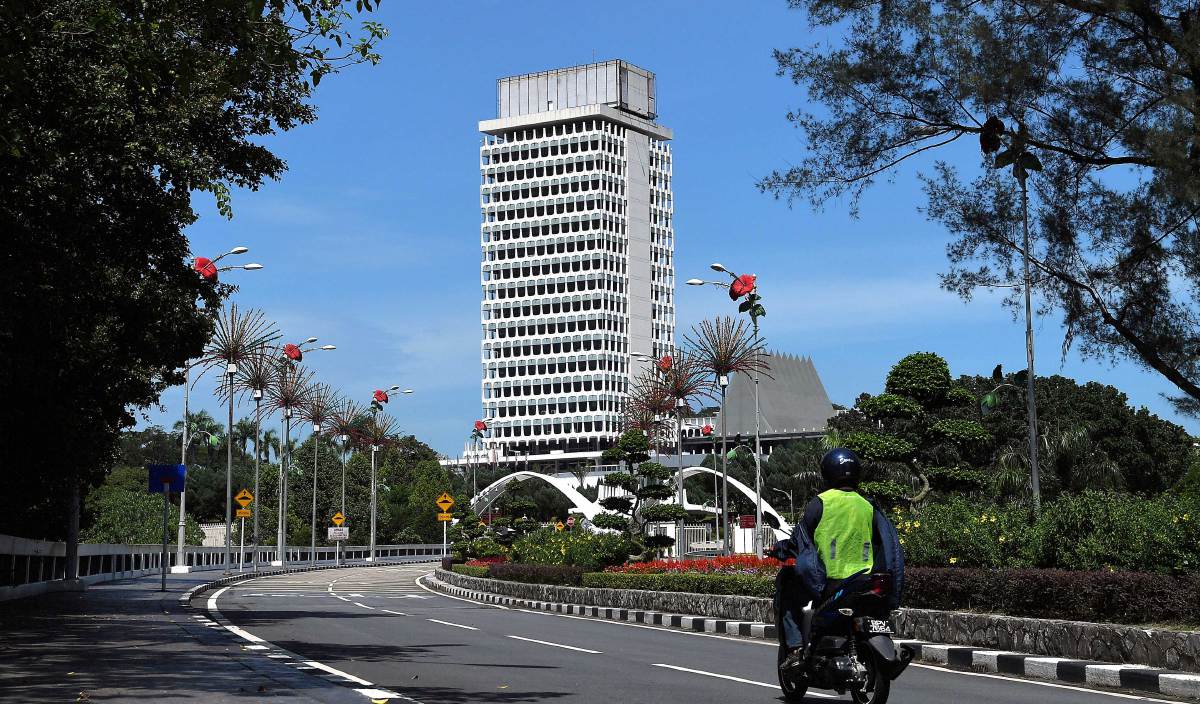
Main image: Harian Metro