

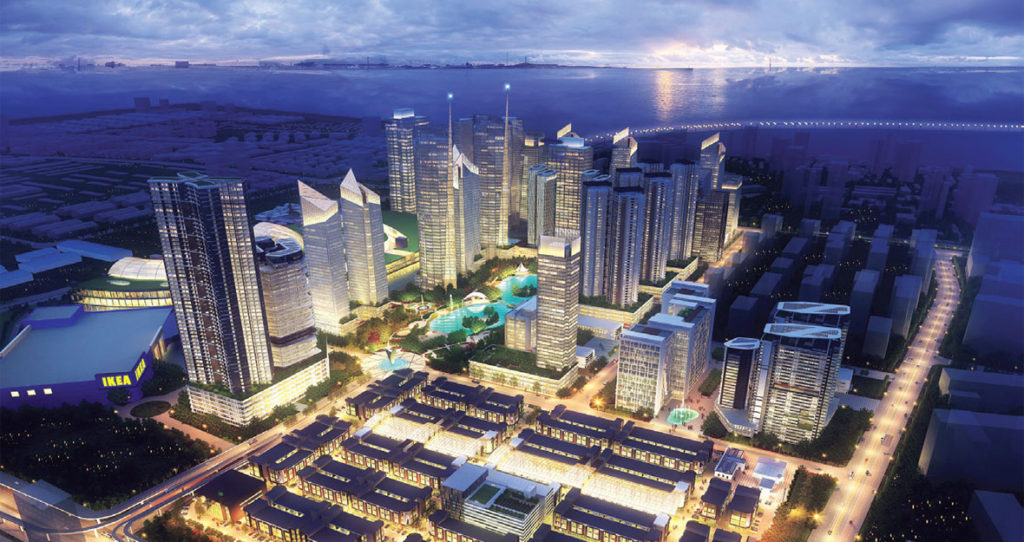
PENANG IS steadily positioning Batu Kawan as its next major industrial growth hub, with the Batu Kawan Industrial Park (BKIP) at its core.
The area’s appeal is strengthened by strong transport links, including the Second Penang Bridge and the North-South Expressway, while serving as a complementary extension to the more established Bayan Lepas industrial zone.
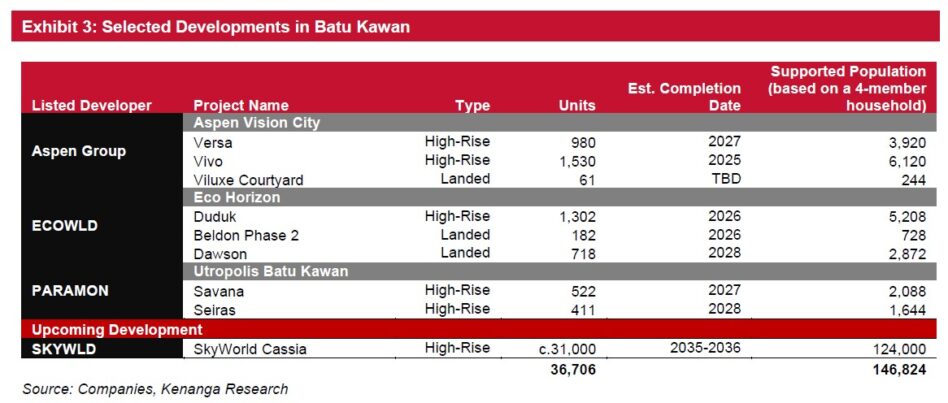
“The area is projected to accommodate 250,000 residents by 2036 accompanied by 45,000-50,000 housing units,” said Kenanga.
Momentum continues to build with the announcement of a Joint Development Agreement in December 2024 involving the Penang Development Corporation (PDC), PDC Properties and SKYWLD (NR), under the Rumah Bakat Baru MADANI initiative.
The development is expected to deliver more than 35,000 affordable homes, spanning Rumah Mampu Milik and Rumah Bakat Baru MADANI units, with prices ranging from RM225,000 to RM420,000.
To prioritise local ownership, half of the units will be reserved for Penang-registered voters, while the remaining 50% will be made available to other buyers.
Beyond Batu Kawan itself, the northern region’s expanding industrial landscape is also fuelling growth in nearby areas. One notable development is the Kulim Hi-Tech Park in Kedah, located about 25km from Prai and well connected to the North-South Expressway.
The park has increasingly become an important extension of the northern semiconductor and advanced manufacturing ecosystem.
While much attention has been placed on residential developments aimed at supporting growing industrial demand on the mainland, several developers are also taking steps to improve homeownership opportunities on Penang Island, where land supply remains limited.
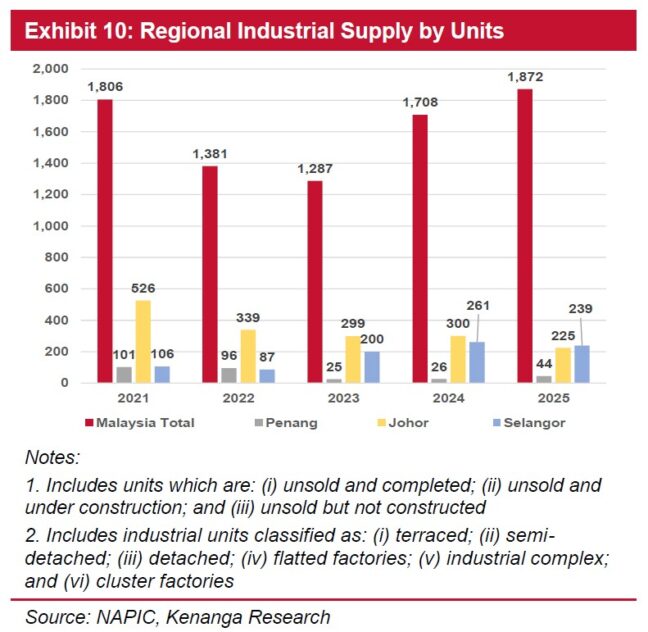
Supporting this expansion are figures from NAPIC, which indicate that Penang remains among the states with the lowest excess industrial inventory, outpacing other major industrial hubs such as Johor which has seen a steady reduction in overhang units, while Selangor continues to record a more balanced replenishment of housing supply alongside economic growth.
Together, these trends suggest that housing supply in key economic centres is increasingly aligning with underlying industrial activity and population growth.
“Separately, we note that Sabah and Sarawak recorded the highest number of industrial stock at 128 and 253 units, respectively,” said Kenanga.
This may indicate that both states are frontloading industrial supply in anticipation of future demand, suggesting a strategy where infrastructure and factory ready facilities are prepared ahead of investment inflows.
Kenanga’s review of NAPIC’s residential data indicates that a sizeable overhang persists in Penang, with over 16,500 unsold homes recorded as at Dec 2025, inclusive of serviced apartments.
This figure excludes upcoming large-scale residential initiatives such as the Rumah Bakat Baru MADANI programme, which aims to deliver an additional 30,000 homes over 10 years, alongside other state-led developments and new launches by both listed and private developers.
In addition, Andaman Island’s long-term aspiration to house up to 250,000 residents over the next 30 years implies a sustained pipeline of supply, which may translate to 2,000 new homes annually (on an assumed 4-member household) to support this target.
“Overall, we believe that while the residential market could face crowding risks if population inflows do not keep pace with job creation from new industrial developments, landed residential projects are likely to remain resilient, given their relatively limited supply compared with high-density high-rise developments,” said Kenanga.
On the other hand, industrial demand remains supportive, with industrial land supply being replenished more gradually. As such, developers with exposure to industrial developments and landed housing may be better positioned to benefit from Penang’s economic growth.—Mar 18, 2026
Main image: PropXpress