
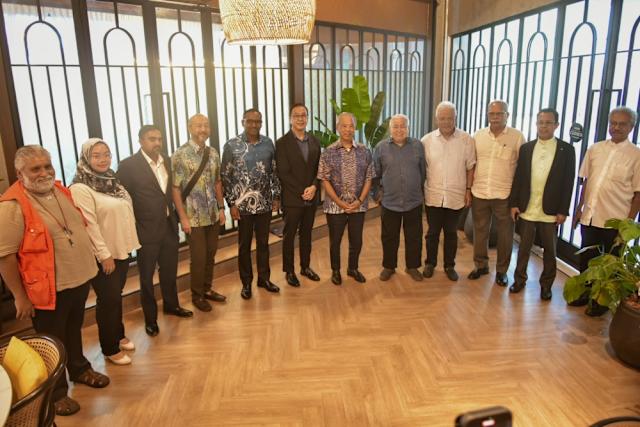
THE formation of a 12-party loose coalition outside the government bloc augurs well for the opposition in general.
Although these parties may appear minuscule, their coming together is a testimony that the opposition must be complemented by political forces beyond the formal opposition bloc in order to effectively channel the myriad social, economic and political grievances of the people.
Sometimes referred to as a united opposition front, the loose coalition should be seen as complementing the efforts of the formal opposition, namely Perikatan Nasional (PN).
Editor’s Note: The dozen parties comprised PN components, namely Bersatu, PAS. Gerakan and the Malaysian Indian People’s Party (MIPP) as well as MUDA, PEJUANG, Perkasa Malaysia (PUTRA), Berjasa, Malaysian Advancement Party (MAP) National Indian Muslim Alliance (IMAN), the United Rights of Malaysian Party (Urimai) and Parti Sosialis Malaysia (PSM).
While these parties are not formally part of the opposition coalition for various reasons, their absence from the structured bloc is in fact a strength rather than a liability.
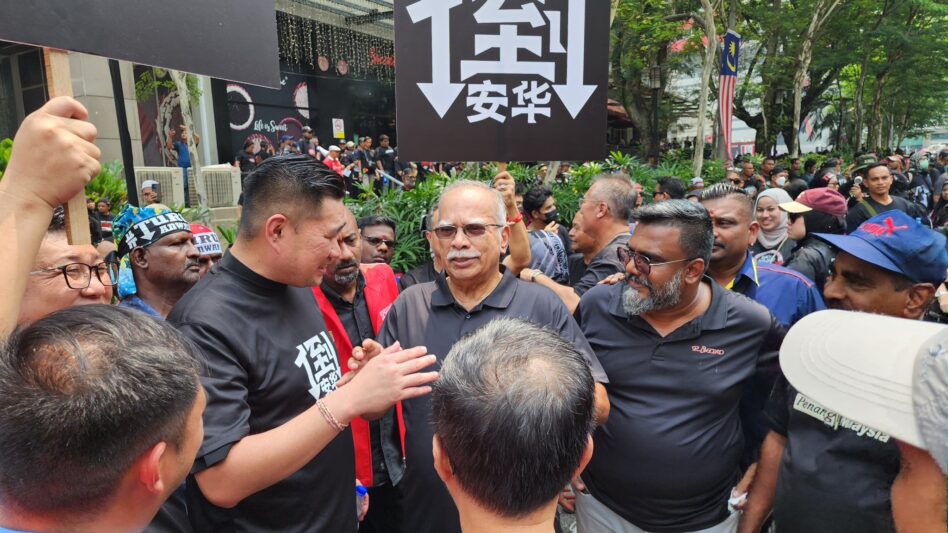
The common denominator uniting both the formal opposition and the loose coalition is their opposition to the present Pakatan Harapan (PH)-led government.
Differences may exist in terms of specifics and strategy but such diversity enhances rather than diminishes the opposition’s reach. Broad-based coalitions are often formed in particular political and social contexts to strengthen the push for change.
Under this framework, only mutually agreed issues are advanced collectively while individual parties remain free to pursue their own objectives. This flexibility makes the coalition dynamic and adaptive to shifting circumstances.
‘Timely response’
The idea of a loose opposition coalition is not unique to Malaysia. Similar models have been adopted in many countries as effective vehicles to challenge and even dethrone ruling governments.
Its emergence here demonstrates that opposition is not confined to formally established parties but extends to broader forces mobilising outside the government bloc.
Importantly, such coalitions are not just theoretical constructs. They must be operationalised through protests, demonstrations and other democratic expressions of dissent.
In the eyes of the public, these manifestations represent the blending of theory and practice in the pursuit of political change.
At yesterday’s (Aug 18) meeting of the 12-party coalition, its chairman Tan Sri Muhyiddin Yassin clearly outlined the coalition’s aims and objectives.
The subsequent media conference focused on the economic hardships faced by the rakyat—an issue agreed upon as a common ground for collective action.
Loose oppositional coalitions are therefore not the product of abstract political thought but rather a timely response to the pressing social, economic and political realities of the country.
Their true test lies in how effectively they can operationalise democratic opposition to a government that appears increasingly detached from the people.
In essence, the loose opposition coalition is democratic in practice – an evolving expression of the people’s will to hold power accountable. – Aug 19, 2025
Former DAP stalwart and Penang chief minister II Prof Ramasamy Palanisamy is chairman of the United Rights of Malaysian Party (Urimai) interim council.
The views expressed are solely of the author and do not necessarily reflect those of Focus Malaysia.