

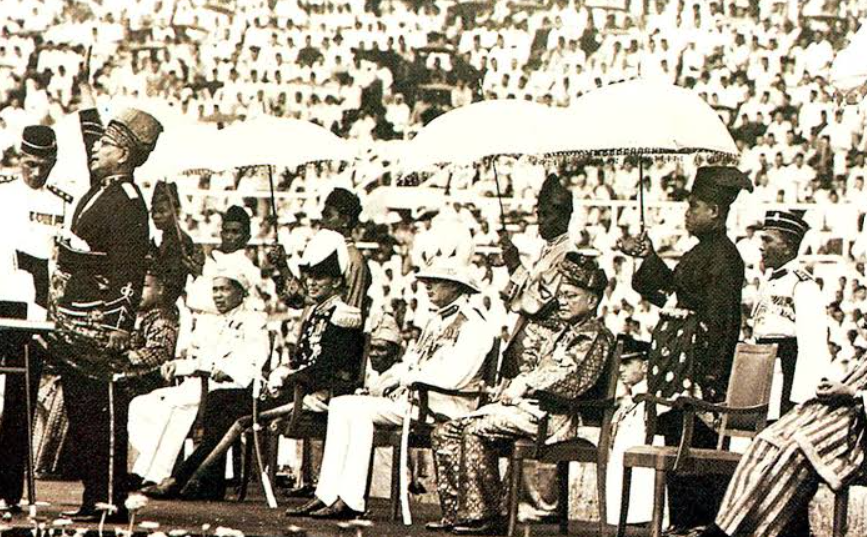
MALAYSIA needs a historical narrative grounded in evidence, not one shaped by personal imagination, political ideology or ethnic interests.
History is more than a collection of dates, personalities and events. It seeks to explain how societies developed, how decisions shaped nations and how people from different backgrounds contributed to the world we inherit.
But when historians interpret the past, where does interpretation end and personal imagination begin?
The discussion surrounding Professor Solehah Yaacob’s interpretation of Malaysian history raises a broader question: if one academic can present a particular account of the past, can another academic, politician, writer or ordinary citizen construct an entirely different narrative based on the same events?
Anyone can propose an alternative interpretation, but the freedom to do so does not make every account equally credible. History must be investigated through evidence, not invented according to preference.
Facts and interpretations are not the same

Three elements must be distinguished when examining historical accounts: established facts, historical interpretations and imagination.
Historical facts are claims supported by credible evidence, including official documents, contemporary records, correspondence, archaeological discoveries and independently corroborated testimony.
Historical interpretation involves explaining why events occurred, what motivated historical figures and how particular developments influenced society.
Historians may reach different conclusions because they examine different evidence, apply different methods or emphasise different aspects of an event.
Historical imagination can help researchers reconstruct the experiences of people whose lives were poorly documented.
It becomes problematic when assumptions about their thoughts, intentions or actions are presented as established facts without sufficient evidence.
Responsible historians must distinguish between what is known, what can reasonably be inferred and what remains uncertain.
Does an academic title guarantee historical truth?
Certainly not. Professors and professional historians deserve respect for their scholarship, but their conclusions must remain open to scrutiny.
The credibility of a historical account depends on the quality of its evidence, the rigour of its methodology and its willingness to engage with alternative explanations.
What sources support the argument? Have contradictory records been considered? Are inconvenient facts omitted? Does the interpretation distinguish documented events from assumptions? Can independent researchers verify or challenge its conclusions?
These questions are not attacks on academic freedom. They are essential safeguards against the misuse of historical authority.
Disagreement between historians can also be productive. New evidence may correct earlier misunderstandings, challenge established assumptions and bring neglected experiences into public understanding.
Whose contributions count in Malaysian history?
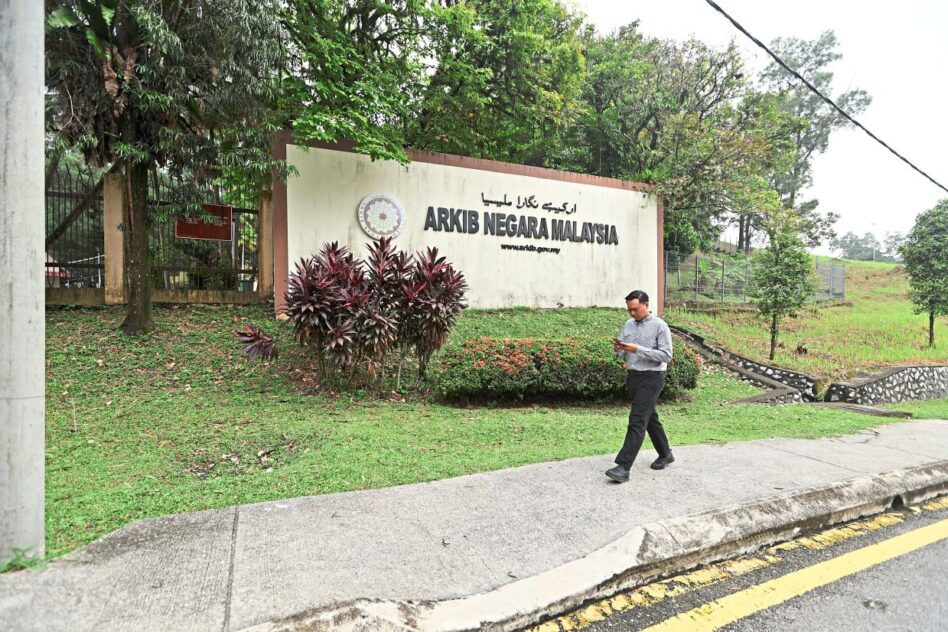
Malaysia provides a particularly important context for this debate because its national development encompasses different communities, political movements and historical experiences.
Accounts of independence, for example, may emphasise the negotiations and leadership of established political parties.
Others may highlight labour movements, left-wing organisations, indigenous communities, women, ordinary citizens and the contributions of Chinese and Indian Malaysians.
These perspectives need not contradict one another. Each can illuminate different aspects of a complex historical process.
The danger arises when a narrative celebrates certain individuals or communities while marginalising others, or when evidence is interpreted primarily to advance contemporary political or ethnic claims.
Recognising previously neglected contributions should enrich our understanding, not simply replace one selective narrative with another.
Malaysia’s history cannot be reduced to the exclusive achievement or possession of any single ethnic group, political party or individual. It is a shared national inheritance, even when the experiences of its people differ.
Five principles for credible history
Malaysia should encourage a culture of historical inquiry founded on five principles.
First, evidence must take precedence over personal opinion. Second, historical conclusions should not be predetermined by political, racial or religious loyalties.
Third, credible sources representing different perspectives should be examined. Fourth, uncertainty and disagreement must be acknowledged honestly. Fifth, historical accounts must remain open to correction when new evidence emerges.
These principles apply equally to professors, politicians, journalists, independent researchers and ordinary citizens.
History education should also encourage students to examine primary sources, compare competing interpretations and ask why historians disagree. Memorising a single narrative without understanding the evidence behind it does little to develop critical thinking.
History belongs to everyone, but evidence matters

There is an important distinction between the right to express an interpretation and the responsibility to substantiate it.
Anyone may legitimately challenge an established historical account, but the challenge must be supported by evidence and reasoning capable of withstanding independent scrutiny.
Equally, an established account should not be accepted merely because it appears in a textbook or is endorsed by an authority.
Historical truth is not determined by whichever influential figure, loudest voice or most popular narrative prevails. Nor should historians be expected to reach identical conclusions about every disputed event.
The objective is to establish the most credible understanding possible from the available evidence, while remaining willing to revise conclusions when warranted.
Ultimately, the question is not who has the right to narrate Malaysian history. Everyone has the right to investigate, discuss and debate our past.
The more important question is whether those who narrate it are prepared to distinguish evidence from assumption, and interpretation from fact.
We must not allow Malaysian history to become whatever someone imagines it to have been. It must remain a rigorous, honest and inclusive effort to establish what happened, why it happened and what the evidence tells us.
Only then can history unite Malaysians through a deeper understanding of our shared past, rather than divide us through competing claims of ownership. ‒ Oct 12, 2026
KT Maran is a Focus Malaysia reader.
The views expressed are solely of the author and do not necessarily reflect those of Focus Malaysia.
Main image: FMT