
ACCORDING to TENAGA, there are 49 projects data centre projects that sum up to 7.1GW. The government has improved the economics for corporates sourcing green power under CRESS programme, which should benefit ultra-high voltage tariff users.
On the likelihood of further hikes from TNB to support grid infrastructure upgrades, CRESS with an underlying 21-year fixed PPA provides a compelling long-term hedge for large energy users such as data centres to insulate against future tariff hikes while honouring ESG and RE100 commitments.
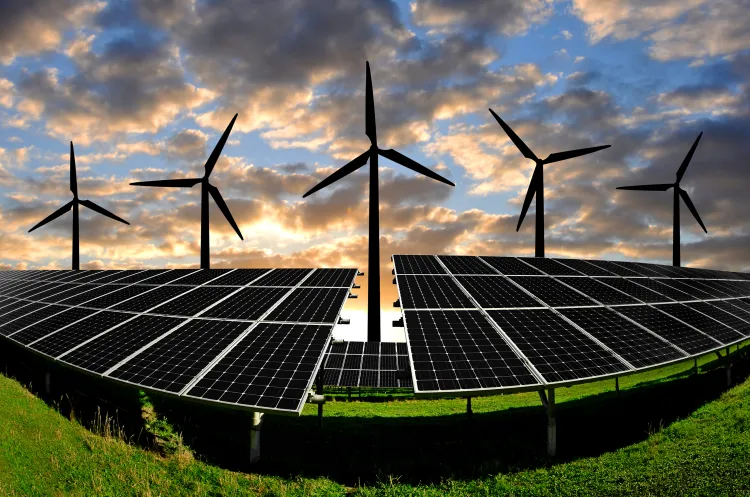
In the public domain, known deals under CRESS include UEM Lestra’s (unlisted) 1GW hybrid solar farm, Gamuda-SD Guthrie developing 1.2GW of solar renewable energy assets and Gamuda-Gentari which has a1GW solar including battery storage solution catering to data centres.
“Recent knowledge that the off-taker for CGPP for Google was via collaboration with SLVEST would in our mind improve the chances for SLVEST to secure Google-related work such as under CRESS programmes in the future,” said Kenanga Research.
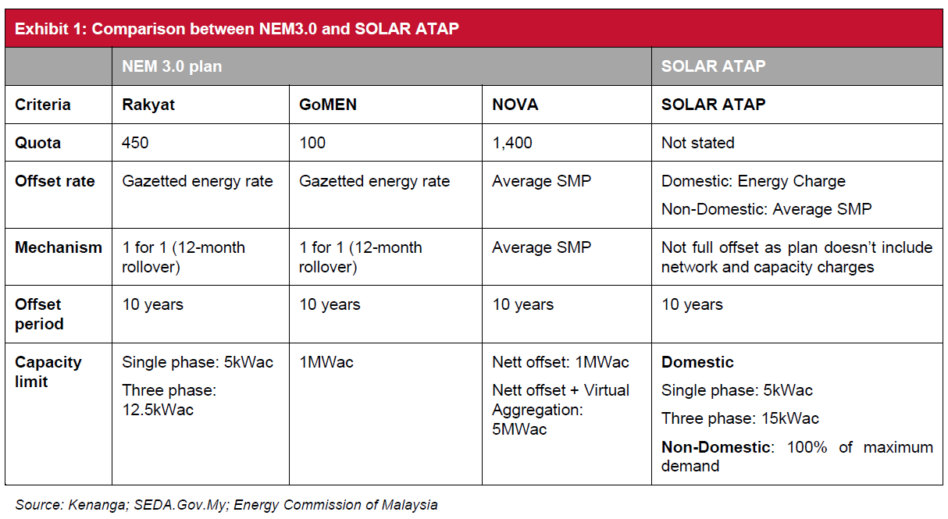
More favourable hyperscaler data centre roll-outs could benefit PEKAT, which would gain from opportunities for its ELP segment. PEKAT through its EPE switchgear segment in our view is also capable of leveraging on data centre growth.
LSS5 and LSS5+ EPCC awards are set to roll out in the immediate term, with targeting completion by end-2027. Altogether, LSS5, LSS5+ and CRESS would be expected to unlock at least RM15 bil worth of EPCC opportunities, with another RM6 bil estimated for LSS6 for the 2GW bids.
“Our assumption is for LSS6 tenders to open for tender by 1QCY26, adding additional job win potential for renewable energy players,” said Kenanga.
Kenanga anticipates that LSS6 will come with requirements for battery, and together with battery installation, but expect that project IRRs won’t be materially different, still eyeing at 8%-10% at the developer level.
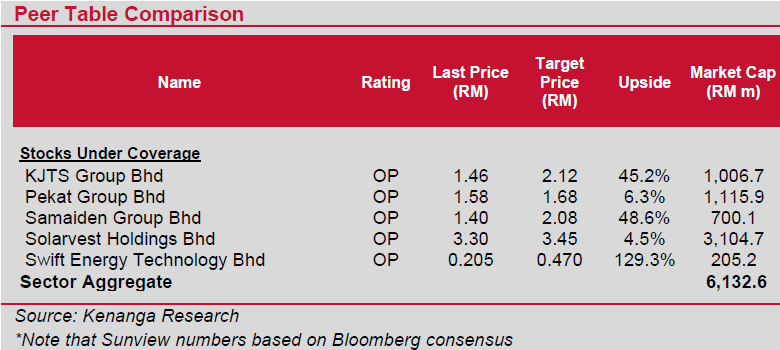
Swing in panel prices are a potential risk to the solar players. China’s anti-involution policy has pushed polysilicon prices up though that have since appear to have stabilised.
Kenanga understand that the cessation of export rebate on panel prices in China since quarter four of calendar year 2025 (4QCY25) would likely still be borne by Malaysian solar players, inducing solar players to procure early; solar module prices has thus since jumped 15% from the trough.
“We anticipate module prices to come in at USD0.11/W in CY26, and while the earnings of solar players are sensitive to panel prices which form bulk of its costs, this would also likely be partially cushioned by a stronger MYR,” said Kenanga. —Jan 2, 2025
Main image: Shutterstock