

MALAYSIA is entering an important political and economic period.
As political parties prepare for upcoming elections, including the prospect of GE16, Malaysians should demand something bigger than another competition over short-term promises.
The real question is not simply who can promise more today, but what kind of economy we will hand to the next generation.
That question matters because Malaysia faces significant external and internal headwinds.
Globally, protectionism is rising, supply chains are increasingly shaped by geopolitics, US-China strategic competition continues, and conflicts in the Middle East have added uncertainty to energy and commodity markets.
As a highly trade-dependent economy, Malaysia cannot insulate itself from these shifts.
The artificial intelligence boom has also created major opportunities for Malaysia’s electrical and electronics, semiconductor and data centre industries. Yet technological cycles can change quickly.
The International Monetary Fund has identified escalating protectionism, global financial volatility and a possible correction in the AI boom among the downside risks facing Malaysia.
At home, the picture is more encouraging, but challenges remain.
Malaysia’s economy expanded 6.0% in the second quarter of 2026, bringing first-half growth to 5.7%. But headline GDP growth does not always reflect everyday reality.
For many households, the cost of living remains the clearest measure of economic health, while wage growth has struggled to keep pace with rising prices.
Malaysia still needs to raise productivity and wages, strengthen fiscal resilience through disciplined use of public resources, reduce dependence on lower-skilled labour, and help local companies move further up global value chains.
The fundamental question is therefore no longer simply how fast Malaysia can grow. It is what kind of economy we are building, and for whom.
Learning from our own history
Malaysia has successfully reinvented its economy before.
The country’s transformation from a commodity-based economy into an important manufacturing and services hub did not happen by accident. Previous administrations articulated long-term ambitions and built institutions and infrastructure to support them.
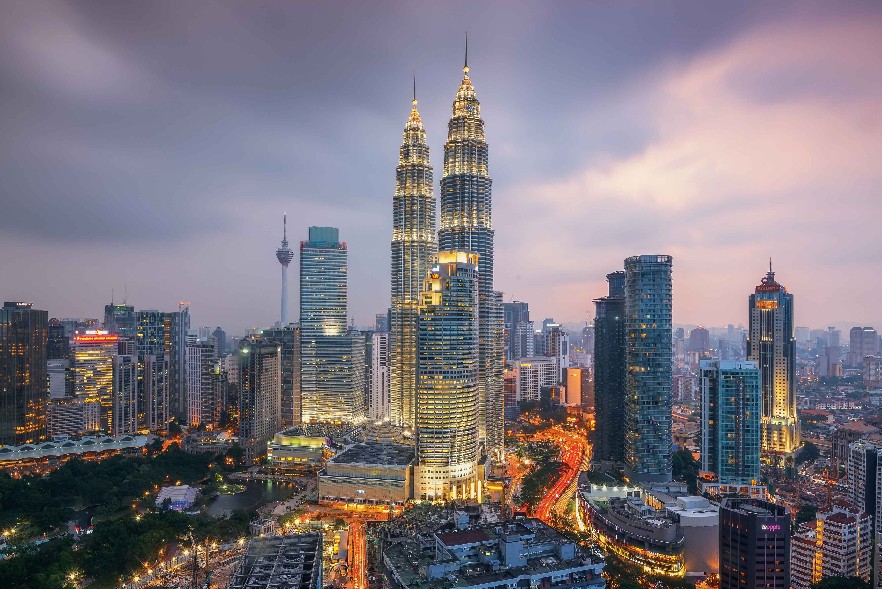
Vision 2020, launched in 1991, provided the country with a clear destination. Projects such as the Petronas Twin Towers, Kuala Lumpur International Airport, Putrajaya, Cyberjaya and the Multimedia Super Corridor reflected an ambition to prepare Malaysia for future industries rather than merely manage existing ones.
Not every project was perfect, but the broader philosophy remains relevant: build for the economy you want to become.
The Asian Financial Crisis offers another lesson.
Malaysia’s unconventional response in 1998, including capital controls, a fixed exchange rate and accelerated restructuring, was controversial at the time. Yet the country recovered strongly.
The lesson is not that Malaysia should recreate those policies today. It is that economic leadership requires the confidence to respond to immediate challenges without losing sight of a longer-term destination.
Looking beyond the next election

As Malaysia moves towards GE16, political debate cannot remain confined to living costs, subsidies, taxes and short-term assistance.
These issues matter because they shape daily life. But Malaysians should also ask a bigger question: where do we want our economy to be in 2040?
Malaysia does not lack plans. What it lacks is a singular, compelling and enduring national economic vision comparable in scale and longevity to Vision 2020.
That vision must also rest on social cohesion. Stability and a shared sense of opportunity have long made Malaysia attractive to investors. Cohesion is not simply a social good. It is an economic asset.
The symbols of Malaysia’s next transformation may not be skyscrapers alone. They could instead be world-class companies, advanced technology, highly skilled workers, stronger productivity and better-paying jobs.
Achieving that will require the same willingness to think beyond the next Budget, the next election and the next economic cycle.
Malaysia’s fundamentals remain strong. Our strategic location, adaptable workforce and long track record of economic development provide a solid foundation.
The challenge now is to convert those strengths into a new long-term vision that prepares Malaysians for a more uncertain global economy.
Malaysia has done it before. It is time to do it again. ‒ Sept 16, 2026
Foo Lee Khean is a Malaysian capital markets practitioner, corporate adviser and commentator on economic, business and public policy issues.
The views expressed are solely of the author and do not necessarily reflect those of Focus Malaysia.
Main image: Unsplash/Amar Syazwan Rosman